
Welcome to the agent-area of . Please select your name from the list below and you can access your personal information immediately!
Welcome to the agent-area.
Do you want to ...
Hello! You can create your own login below.
You successfully logged out. If you need access to the protected area again, you can login again at any time.
Greetings from Cuzco,
The Otto's Tours Team
The Galápagos Archipelago was formed by volcanic activity above a geological hotspot beneath Fernandina Island and has been drifting slowly southeast ever since. Since Charles Darwin's famous visit in 1835, the islands have moved by approximately four metres. The youngest and still volcanically active islands are located in the west, while the older, more eroded and flatter islands lie further east.
Also known as South Seymour, Baltra covers just 27 km², making it one of the smaller islands of the archipelago. Its airport, originally constructed during the Second World War, is today the principal gateway to the Galápagos Islands.
At 986 km², Santa Cruz is the second-largest and most populous island. Its main town, Puerto Ayora, is home to the archipelago's principal harbour, the headquarters of the Galápagos National Park, and the renowned Charles Darwin Research Station.
Isabela, the largest island of the Galápagos, is shaped like a seahorse and is the youngest island in geological terms. Sparsely populated, it is characterised by dramatic lava fields, active volcanoes and extensive lava tunnels. Its extraordinary wildlife and spectacular volcanic landscapes make Isabela one of the highlights of any Galápagos journey.
 Welcome to the Galápagos Islands! Upon arrival on Baltra, a shuttle bus takes you to the
Itabaca Channel, where you cross by ferry to Santa Cruz Island. On the way to Puerto Ayora,
you stop at the twin sinkholes Los Gemelos, enjoying views over the lush Scalesia cloud forest.
With a little luck, you may already spot your first endemic bird species, including Darwin's finches or short-eared owls.
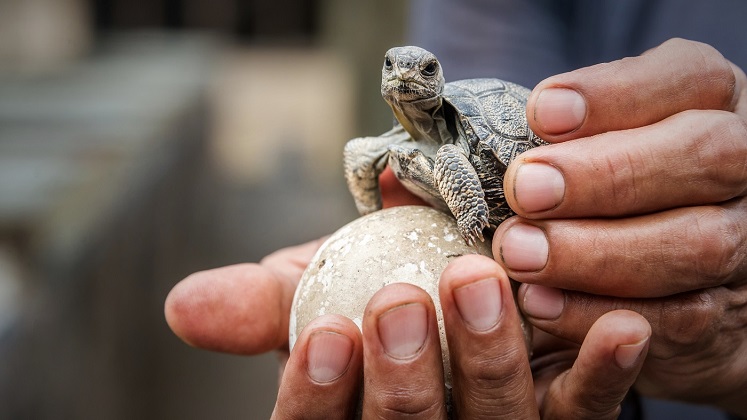
Next, visit El Chato Ranch, where giant tortoises roam freely in their natural habitat.
You will also explore one of the island's impressive lava tunnels before continuing to the lively harbour town of Puerto Ayora (optional lunch).
The afternoon is free for an individual visit to the famous Charles Darwin Research Station,
where you can learn about the conservation of the Galápagos' unique wildlife, especially the giant tortoises.
The station was once home to the legendary Lonesome George, the last known individual of his subspecies, who lived here until 2012.
Welcome to the Galápagos Islands! Upon arrival on Baltra, a shuttle bus takes you to the
Itabaca Channel, where you cross by ferry to Santa Cruz Island. On the way to Puerto Ayora,
you stop at the twin sinkholes Los Gemelos, enjoying views over the lush Scalesia cloud forest.
With a little luck, you may already spot your first endemic bird species, including Darwin's finches or short-eared owls.
Next, visit El Chato Ranch, where giant tortoises roam freely in their natural habitat.
You will also explore one of the island's impressive lava tunnels before continuing to the lively harbour town of Puerto Ayora (optional lunch).
The afternoon is free for an individual visit to the famous Charles Darwin Research Station,
where you can learn about the conservation of the Galápagos' unique wildlife, especially the giant tortoises.
The station was once home to the legendary Lonesome George, the last known individual of his subspecies, who lived here until 2012.
Our overnight stay will be in Puerto Ayora, Santa Cruz be at the ***Hotel Casa de Judy or equivalent. (No meals are
included today.)
Travel time: 1h30min / Walking time: 1h30min
 This morning, travel by speedboat to Isabela Island, the largest island of the Galápagos archipelago,
famous for its beautiful beaches and crystal-clear turquoise waters.
After a refreshing swim and some free time for lunch in Puerto Villamil (not included), your
local guide will meet you for an afternoon excursion. Together with a small international group,
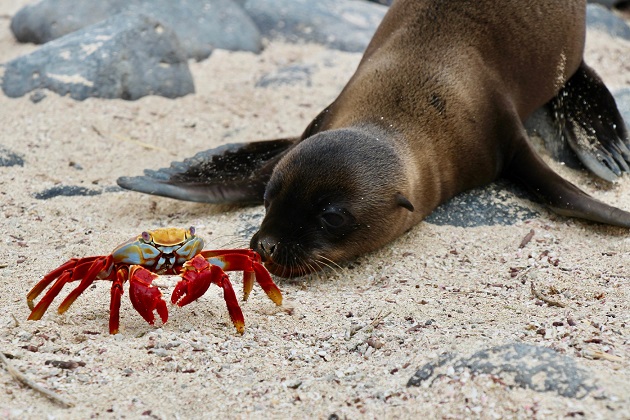
you take a boat to the nearby islet of Las Tintoreras, one of the best places to observe sea turtles,
sea lions, marine iguanas, rays and white-tip reef sharks.
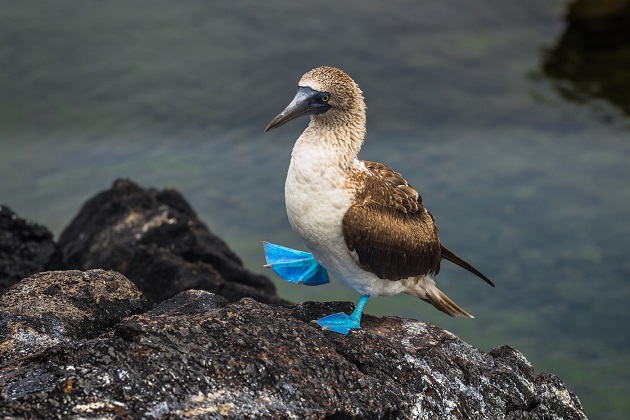
During a walk across lava fields and sandy beaches, you may also spot Nazca boobies or the
iconic blue-footed boobies. Afterwards, enjoy snorkelling in the calm bay, where an extraordinary
underwater world awaits. Later, you may wish to stroll to Laguna Villamil, where elegant
flamingos and numerous wading birds feed in the shallow lagoons. End the day with a cocktail
while watching the sunset barefoot from a beachfront bar.
This morning, travel by speedboat to Isabela Island, the largest island of the Galápagos archipelago,
famous for its beautiful beaches and crystal-clear turquoise waters.
After a refreshing swim and some free time for lunch in Puerto Villamil (not included), your
local guide will meet you for an afternoon excursion. Together with a small international group,
you take a boat to the nearby islet of Las Tintoreras, one of the best places to observe sea turtles,
sea lions, marine iguanas, rays and white-tip reef sharks.
During a walk across lava fields and sandy beaches, you may also spot Nazca boobies or the
iconic blue-footed boobies. Afterwards, enjoy snorkelling in the calm bay, where an extraordinary
underwater world awaits. Later, you may wish to stroll to Laguna Villamil, where elegant
flamingos and numerous wading birds feed in the shallow lagoons. End the day with a cocktail
while watching the sunset barefoot from a beachfront bar.
Our overnight stay will be in Puerto Villamil, Isabela at ***Hotel Sula Sula or equivalent. (Breakfast included)
Boat: 2h30min / Walking time: 2h30
 After breakfast, an open 4WD vehicle takes you into the lush highlands of Isabela Island,
where your hike to Sierra Negra Volcano begins.
Its enormous caldera is among the largest volcanic craters in the world and offers
spectacular panoramic views across the vast lava fields created during the most recent
eruption in 2005. Along the trail, you may encounter Darwin's finches, Galápagos hawks,
active fumaroles and fascinating volcanic landscapes unique to the archipelago.
After breakfast, an open 4WD vehicle takes you into the lush highlands of Isabela Island,
where your hike to Sierra Negra Volcano begins.
Its enormous caldera is among the largest volcanic craters in the world and offers
spectacular panoramic views across the vast lava fields created during the most recent
eruption in 2005. Along the trail, you may encounter Darwin's finches, Galápagos hawks,
active fumaroles and fascinating volcanic landscapes unique to the archipelago.
Our overnight stay will be in Puerto Villamil, Isabela at ***Hotel Sula Sula or equivalent. (Breakfast and box lunch included)
Travel time: 1h10min / Walking time: 3h00
 Early this morning, you join a small international group for a full-day boat excursion.
Your first stop is Roca Unión, where pelicans, boobies and sea lions can often be observed directly from the boat.
After approximately two hours, you arrive at Cabo Rosa (Los Túneles)—one of the Galápagos' most
spectacular natural wonders. Ancient lava flows have created a maze of natural arches, tunnels and crystal-clear channels.
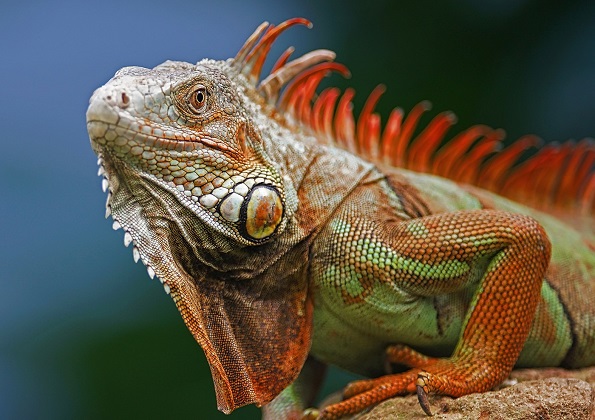
During your snorkelling experience, you may encounter sea turtles, sea lions, rays, marine iguanas and,
with a little luck, even Galápagos penguins, giant seahorses or occasionally orca whales. Many animals can
also be observed comfortably from the boat, making this excursion equally enjoyable for non-snorkellers.
Early this morning, you join a small international group for a full-day boat excursion.
Your first stop is Roca Unión, where pelicans, boobies and sea lions can often be observed directly from the boat.
After approximately two hours, you arrive at Cabo Rosa (Los Túneles)—one of the Galápagos' most
spectacular natural wonders. Ancient lava flows have created a maze of natural arches, tunnels and crystal-clear channels.
During your snorkelling experience, you may encounter sea turtles, sea lions, rays, marine iguanas and,
with a little luck, even Galápagos penguins, giant seahorses or occasionally orca whales. Many animals can
also be observed comfortably from the boat, making this excursion equally enjoyable for non-snorkellers.
Our overnight stay will be in Puerto Villamil, Isabela at ***Hotel Sula Sula or equivalent. (Breakfast and box lunch included)
Boat: 4h00min / Walking time: 0h30
Early in the morning, you return by speedboat to Puerto Ayora, where your driver is already waiting.
From there, you continue to the Itabaca Channel, cross once more by ferry and board the airport shuttle on Baltra Island.
It is time to say goodbye to one of the world's most extraordinary natural destinations.
Your flight takes you back to mainland Ecuador—either Quito or Guayaquil—where your onward
journey or international flight home begins.
Box-breakfast included / Travel time: 1h00min / Boat: 2h30