
Welcome to the agent-area of . Please select your name from the list below and you can access your personal information immediately!
Welcome to the agent-area.
Do you want to ...
Hello! You can create your own login below.
You successfully logged out. If you need access to the protected area again, you can login again at any time.
Greetings from Cuzco,
The Otto's Tours Team
Best Ager on Tour: Peru, Bolivia & Brazil
Best Ager on Tour: Peru, Bolivia & Brazil
 This is no ordinary jungle tour. This expedition-style adventure takes us from the high Andes of
Peru deep into the steaming Amazon Basin of Bolivia and Brazil – far away from conventional tourist routes.
We immerse ourselves in the everyday life of Amazonia and meet the people who call
the rainforest home: banana traders, jungle farmers, legal and illegal gold miners,
Brazil-nut harvesters, Indigenous communities, shamans, village teachers and nurses in remote jungle settlements.
This is no ordinary jungle tour. This expedition-style adventure takes us from the high Andes of
Peru deep into the steaming Amazon Basin of Bolivia and Brazil – far away from conventional tourist routes.
We immerse ourselves in the everyday life of Amazonia and meet the people who call
the rainforest home: banana traders, jungle farmers, legal and illegal gold miners,
Brazil-nut harvesters, Indigenous communities, shamans, village teachers and nurses in remote jungle settlements.
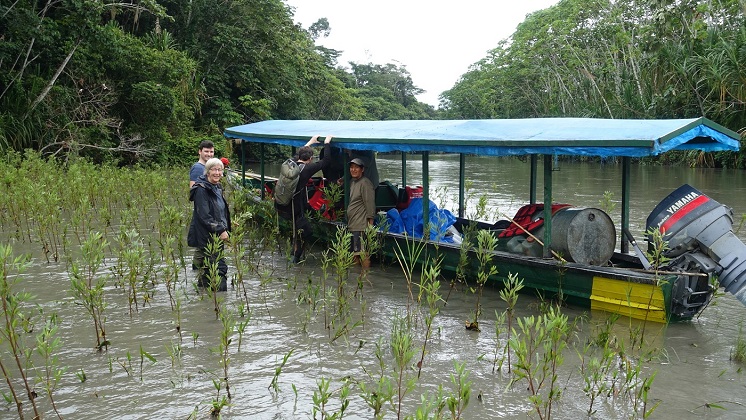
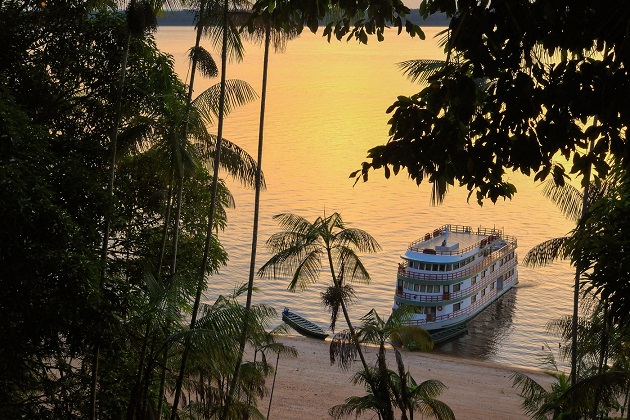
Travelling in small expedition boats, we explore the nature reserves of Amarakeiri,
Tambopata, Manupiri and Humayta, as well as the Matsiguenka Indigenous communities in
the restricted Manu Biosphere Reserve, accessible only with special permission and under
strict regulations. With a little luck, we’ll encounter some of the Amazon’s extraordinary
wildlife in one of the world’s largest rainforest regions.
After a fascinating encounter with a local shaman, our adventure continues along
remote but legally accessible jungle routes towards Bolivia. We cross the border to a
small supply village serving Brazil-nut collectors and gold miners, where our expedition
boat and Indigenous cooking team await us. Days on board are accompanied by freshly
prepared meals, coffee and cake, a three-course dinner and even Chilean red wine.
Small waterfalls and secluded river beaches offer welcome opportunities to cool off in the heart of the rainforest.
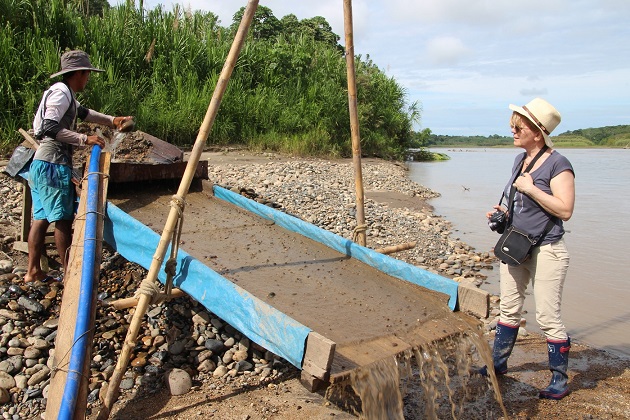 In Huepetuhe, we witness first-hand the dramatic impact of deforestation.
This sprawling illegal gold-mining settlement consists of makeshift huts and
tarpaulin shelters in a devastated landscape nearly half the size of Belgium.
Fuel smugglers, traders, mechanics and countless small businesses serve the
people who live and work here. Only the distant green canopy reminds us that
we are still deep in the Amazon – and we are right in the middle of it.
In Huepetuhe, we witness first-hand the dramatic impact of deforestation.
This sprawling illegal gold-mining settlement consists of makeshift huts and
tarpaulin shelters in a devastated landscape nearly half the size of Belgium.
Fuel smugglers, traders, mechanics and countless small businesses serve the
people who live and work here. Only the distant green canopy reminds us that
we are still deep in the Amazon – and we are right in the middle of it.
After staying in the colonial home of a former Bolivian rubber baron, we continue
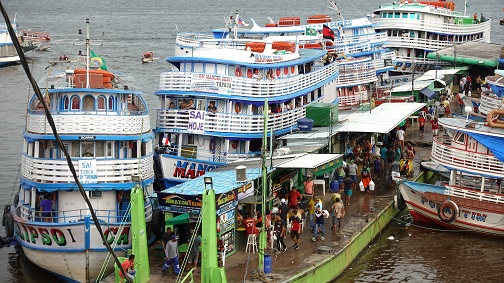
into Brazil and board a traditional Amazonian cargo boat. For two to three days,
we travel downstream along the Rio Madeira, sharing the river journey with local
passengers and cargo, before reaching a small village with a jungle airstrip.
From here, a small aircraft takes us safely to Manaus.
In the Amazon metropolis, we visit the magnificent Teatro Amazonas,
explore the colorful local market and experience the rhythm of everyday
life in salsa and samba bars. We also visit the famous Meeting of the Waters,
where the dark Rio Negro meets the sandy-colored Rio Solimões before the two
rivers merge to form the Amazon, and explore a fascinating rubber museum.
 In the Amazon, there is still a sense of freedom and discovery that has
become rare elsewhere. Every day brings something unexpected, and every
encounter opens a window into a different way of life. The itinerary naturally
adapts to the group, local conditions and the realities of travelling in the rainforest.
That is what makes this expedition so special.
In the Amazon, there is still a sense of freedom and discovery that has
become rare elsewhere. Every day brings something unexpected, and every
encounter opens a window into a different way of life. The itinerary naturally
adapts to the group, local conditions and the realities of travelling in the rainforest.
That is what makes this expedition so special.
Despite its adventurous character, the expedition is suitable for anyone
with a normal level of physical fitness who is comfortable with 2–3-hour
hikes in a tropical climate, sometimes on slippery terrain, and able to carry
their own luggage for approximately 150 meters.
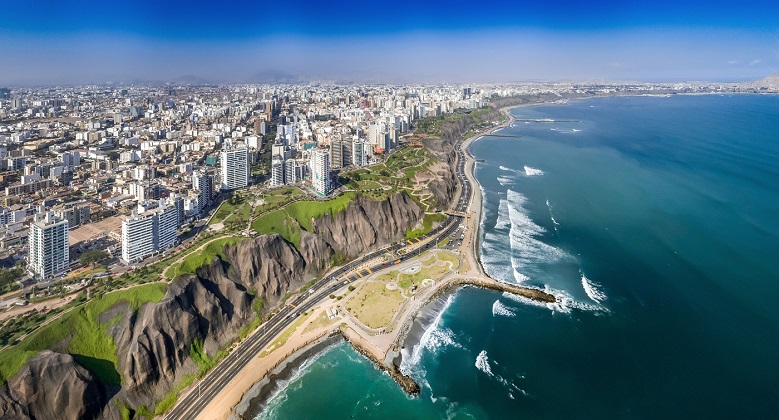 Arrival in Lima, the capital of Peru, where our English-speaking guide will meet us
and accompany us to our hotel near the airport.
In the evening, we hold our expedition briefing, during which our guide
will go over the itinerary in detail and answer any questions you may have.
Arrival in Lima, the capital of Peru, where our English-speaking guide will meet us
and accompany us to our hotel near the airport.
In the evening, we hold our expedition briefing, during which our guide
will go over the itinerary in detail and answer any questions you may have.
Our overnight stay will be at the ***Hotel Lima or equivalent in Lima (No meals included)
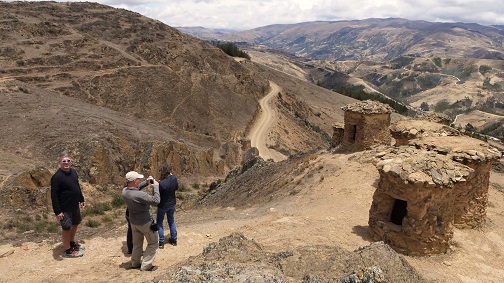 Very early in the morning, we fly from Lima to Cusco, where we meet the participants
joining from the pre-tour. Here, everyone is equipped with the essential high
rubber boots needed for our jungle expedition. We then set off in a minibus along
partly unpaved roads, crossing the mighty High Andes to the ancient Aymara
burial towers of Ninamarka, which we explore on a short walk.
Very early in the morning, we fly from Lima to Cusco, where we meet the participants
joining from the pre-tour. Here, everyone is equipped with the essential high
rubber boots needed for our jungle expedition. We then set off in a minibus along
partly unpaved roads, crossing the mighty High Andes to the ancient Aymara
burial towers of Ninamarka, which we explore on a short walk.
A little later, we reach Paucartambo, a former Inca stronghold that
comes alive every July during its famous mask carnival, a spectacle
reminiscent of a surreal theatrical performance. With its brilliant white
walls and striking azure doors and balconies, the town has an almost
ghost-town-like charm. We visit the local museum to learn more about
the geography, history, culture, religion, music and hopes of the
people who call this remote town home.
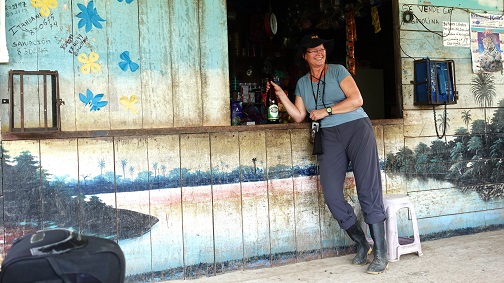 We continue to the former checkpoint of Manu National Park, where we
stop for lunch. From here, the road winds steadily downhill into the
steaming Amazon Basin. Along the way, we may already have our first
opportunity to spot Peru’s national bird, the spectacular Andean
Cock-of-the-Rock (Gallito de las Rocas).
We continue to the former checkpoint of Manu National Park, where we
stop for lunch. From here, the road winds steadily downhill into the
steaming Amazon Basin. Along the way, we may already have our first
opportunity to spot Peru’s national bird, the spectacular Andean
Cock-of-the-Rock (Gallito de las Rocas).
Our overnight stay will be in Pillcopata, at the Gallito de Las Rocas Lodge of the Matsiguenka
Indians or in equivalent accommodation. (Full board)
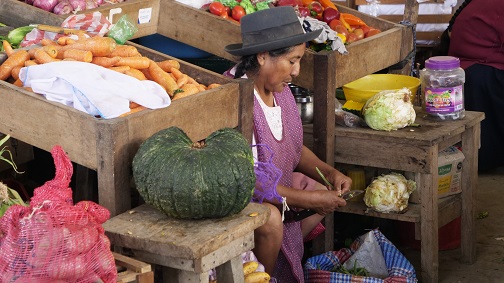 We start the day with a short walk through the village of Pillcopata. We visit the
central square, the small local market and the village hospital to gain our
first insight into everyday life in the Amazon.
We start the day with a short walk through the village of Pillcopata. We visit the
central square, the small local market and the village hospital to gain our
first insight into everyday life in the Amazon.
From Pillcopata, we continue along winding jungle roads. Along the way,
we stop at a wildlife rescue center, where animals once kept as pets – including
tapirs, monkeys, caimans and sloths – are rehabilitated and prepared for life back in the rainforest.
A guided visit to a small orchid farm introduces us to a tropical paradise
filled with fascinating plants. Keep your eyes open for colorful hummingbirds
feeding on the nectar – with a little luck, we may spot up to 12 different species!
We then continue in rugged 4x4 vehicles to Salvación, the district capital in
the heart of the jungle, home to around 1,200 people. The road becomes
increasingly rough: soon the gravel disappears altogether and we follow
muddy jungle tracks through the Chontachaka Ecological Reserve towards
Shintuya, a village of the Matsiguenka Indigenous people.
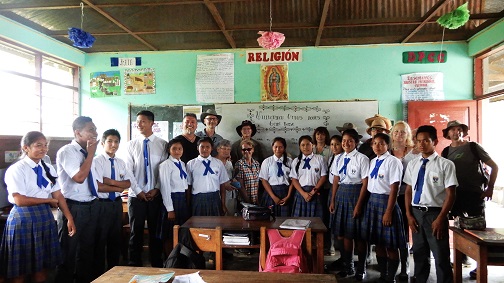 Here, we visit the local school and have the opportunity to talk
with older students about life in the rainforest and their hopes for the future.
Around midday, we reach Boca Manu, a settlement originally established
during the rubber boom by the legendary Fitzcarraldo. Today, it serves as a
supply village for Indigenous communities and gold miners. Our cooking
team is already waiting with a delicious lunch.
Here, we visit the local school and have the opportunity to talk
with older students about life in the rainforest and their hopes for the future.
Around midday, we reach Boca Manu, a settlement originally established
during the rubber boom by the legendary Fitzcarraldo. Today, it serves as a
supply village for Indigenous communities and gold miners. Our cooking
team is already waiting with a delicious lunch.
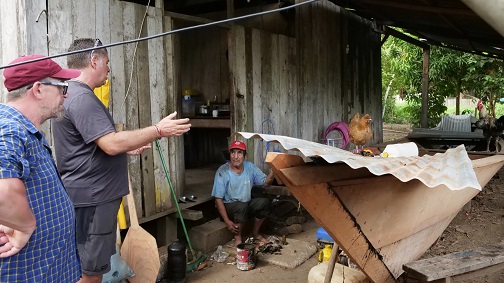
Afterwards, we explore the village and meet the boat builder who constructed
our expedition boat, which will take us deep into the Manu National Park
the following day. He explains how the boats are built, which different
models are available and how they are sold and delivered to remote communities.
In the evening, we join the locals for a cold beer in one of the village’s
small bars – an authentic glimpse into everyday life in this remote corner of the Amazon.
Overnight in very basic accommodation in the heart of Boca Manu, with 4 shared toilets and 4 shared showers. Please note: Single rooms are not available. (Full board)
Early in the morning, we leave the clear waters of the Madre de Dios River,
flowing down from the glaciers of the Andes, and enter the muddy waters of the
Manu River. We make a short stop at the park ranger station in Limonal to
present our permits before continuing deeper into the reserve.
We spend around five hours travelling upstream by boat along the Manu River.
Especially during the dry season, the riverbanks are alive with nesting and
feeding birds, including herons, egrets, Orinoco geese, terns and skimmers.
On the sandy beaches, Black and White Caimans bask in the sun alongside
nesting Yellow-spotted River Turtles (Podocnemis unifilis).
Hundreds of sand-colored nighthawks rest on tree trunks and riverbanks
during the day, while the river journey offers the rare possibility of
spotting a jaguar (Panthera onca), one of the largest cats in the world.
We also keep an eye out for several species of monkeys, perhaps including
howler monkeys, squirrel monkeys and tamarins.
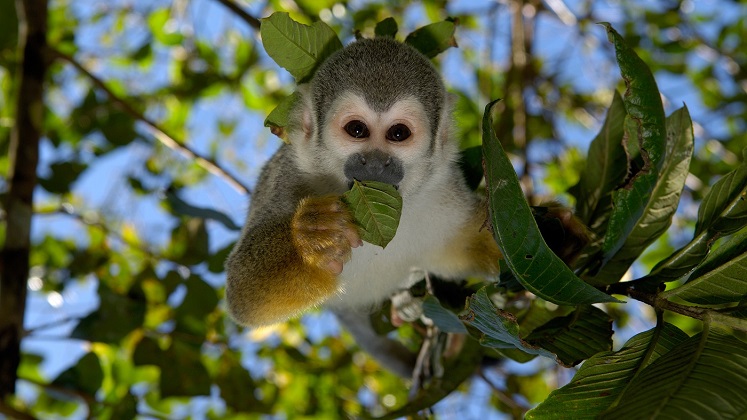 In the afternoon, we reach Casa Matsiguenka, a very rustic lodge built using traditional Indigenous
construction techniques and operated by the Matsiguenka community themselves.
The accommodation is deliberately simple, with basic bathrooms and showers,
12 twin rooms with simple beds and mosquito nets.
Before and after dinner, we head out along some of the surrounding
rainforest trails in search of nocturnal wildlife. As darkness falls,
the jungle comes alive with sounds and creatures that remain hidden during the day.
In the afternoon, we reach Casa Matsiguenka, a very rustic lodge built using traditional Indigenous
construction techniques and operated by the Matsiguenka community themselves.
The accommodation is deliberately simple, with basic bathrooms and showers,
12 twin rooms with simple beds and mosquito nets.
Before and after dinner, we head out along some of the surrounding
rainforest trails in search of nocturnal wildlife. As darkness falls,
the jungle comes alive with sounds and creatures that remain hidden during the day.
Overnight at Casa Matsiguenka. Please note: Single rooms are not available. (Full board)
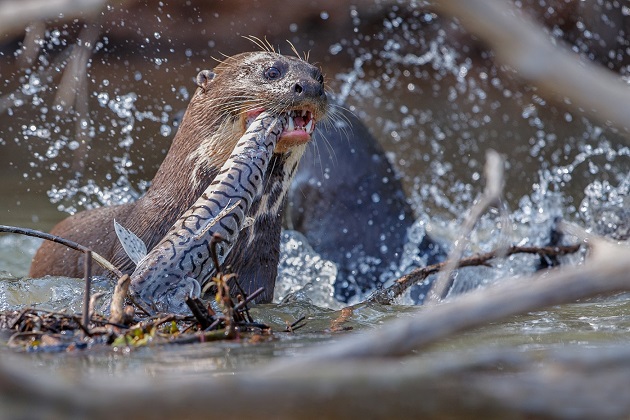 After breakfast, we spend the morning exploring Cocha Salvador. We glide silently
across the lake on a raft, observing the extraordinary wildlife along its shores
and in the surrounding rainforest. With a little luck, we may spot Agami herons,
hoatzins, ospreys and sungrebes, as well as several species of monkeys. Brown capuchins,
white-fronted capuchins and spider monkeys are often found near fruiting trees and
can therefore be relatively easy to observe.
After breakfast, we spend the morning exploring Cocha Salvador. We glide silently
across the lake on a raft, observing the extraordinary wildlife along its shores
and in the surrounding rainforest. With a little luck, we may spot Agami herons,
hoatzins, ospreys and sungrebes, as well as several species of monkeys. Brown capuchins,
white-fronted capuchins and spider monkeys are often found near fruiting trees and
can therefore be relatively easy to observe.
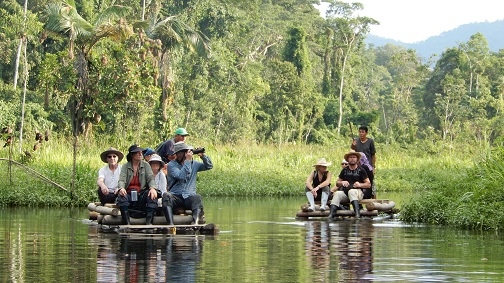 From a specially constructed observation platform overlooking the lake, we keep
watch for a family of giant river otters (Pteronura brasiliensis), the largest
freshwater predators in the world. Manu is home to several family groups, and these
impressive animals can sometimes be seen catching and devouring large fish along the lake shore.
From a specially constructed observation platform overlooking the lake, we keep
watch for a family of giant river otters (Pteronura brasiliensis), the largest
freshwater predators in the world. Manu is home to several family groups, and these
impressive animals can sometimes be seen catching and devouring large fish along the lake shore.
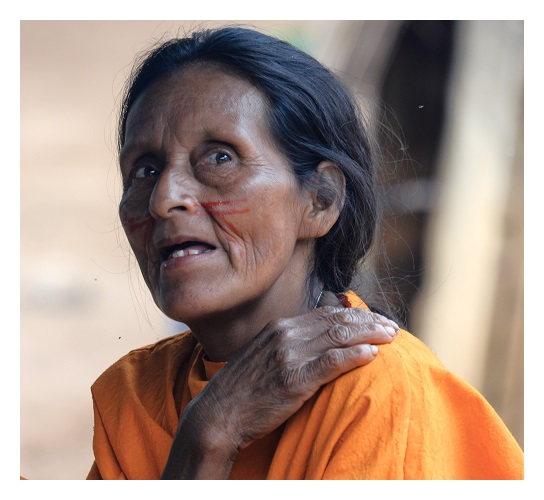 We then continue our exploration on foot through the rainforest. Along the way,
we may encounter troops of monkeys, particularly woolly and spider monkeys, while
our Indigenous nature guide introduces us to the remarkable plants and traditional uses of the rainforest.
We then continue our exploration on foot through the rainforest. Along the way,
we may encounter troops of monkeys, particularly woolly and spider monkeys, while
our Indigenous nature guide introduces us to the remarkable plants and traditional uses of the rainforest.
Later, we reach Otorongo Lake, where we can climb a 20-meter-high observation
tower for a spectacular view over the lake and surrounding jungle – an ideal
vantage point for spotting birds and other wildlife.
Overnight at Casa Matsiguenka. Please note: Single rooms are not available. (Full board)
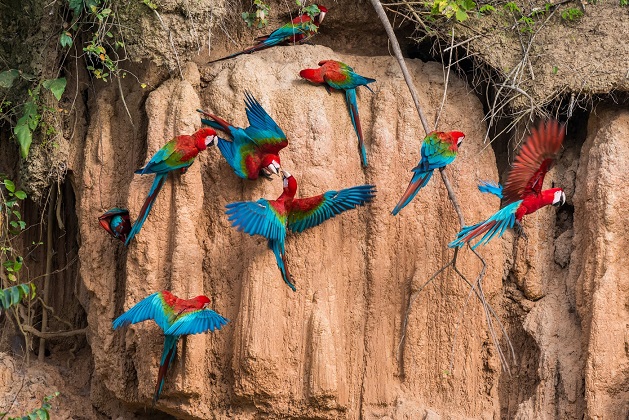 As the first golden rays of sunlight reflect on the river, we travel by boat to an
observation point overlooking a spectacular macaw clay lick. Here, silence and
patience are rewarded: with binoculars at the ready, we watch hundreds of brightly
colored red-and-green macaws gathering at the clay lick. The birds ingest mineral-rich clay,
which helps neutralize toxins and other substances they consume with their food.
After this remarkable wildlife spectacle, we continue by boat to Pakitza,
the last ranger post of Manu National Park.
As the first golden rays of sunlight reflect on the river, we travel by boat to an
observation point overlooking a spectacular macaw clay lick. Here, silence and
patience are rewarded: with binoculars at the ready, we watch hundreds of brightly
colored red-and-green macaws gathering at the clay lick. The birds ingest mineral-rich clay,
which helps neutralize toxins and other substances they consume with their food.
After this remarkable wildlife spectacle, we continue by boat to Pakitza,
the last ranger post of Manu National Park.
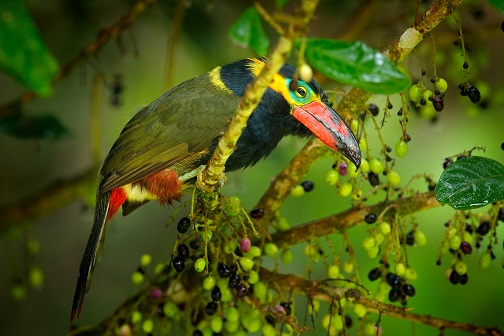 From here, we set off on foot through
the evergreen rainforest, passing towering kapok trees up to 55 meters high,
countless species of palms, vines and strangler figs.
Our destination is a 3-meter-high tapir observation platform. As daylight
fades into complete darkness, the sounds of the jungle grow louder and more mysterious.
At any moment, the largest land mammal in South America may emerge from the forest:
the lowland tapir, weighing up to 250 kg, may approach the platform to lick
mineral-rich soil, which is believed to help with digestion.
From here, we set off on foot through
the evergreen rainforest, passing towering kapok trees up to 55 meters high,
countless species of palms, vines and strangler figs.
Our destination is a 3-meter-high tapir observation platform. As daylight
fades into complete darkness, the sounds of the jungle grow louder and more mysterious.
At any moment, the largest land mammal in South America may emerge from the forest:
the lowland tapir, weighing up to 250 kg, may approach the platform to lick
mineral-rich soil, which is believed to help with digestion.
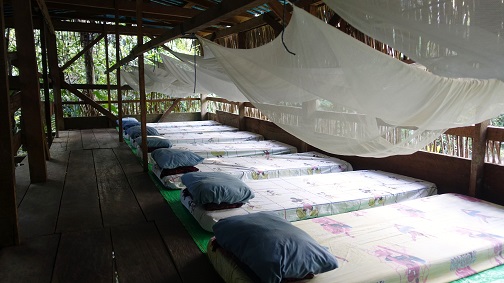 Tonight, we experience the rainforest after dark from our elevated observation
platform. We sleep on simple mattresses under mosquito nets, surrounded by
the sounds of the nocturnal jungle.
Tonight, we experience the rainforest after dark from our elevated observation
platform. We sleep on simple mattresses under mosquito nets, surrounded by
the sounds of the nocturnal jungle.
Overnight on the observation platform on simple mattresses with mosquito nets. Please note: Shared toilet facilities are available, and single rooms are not possible. (Full board)
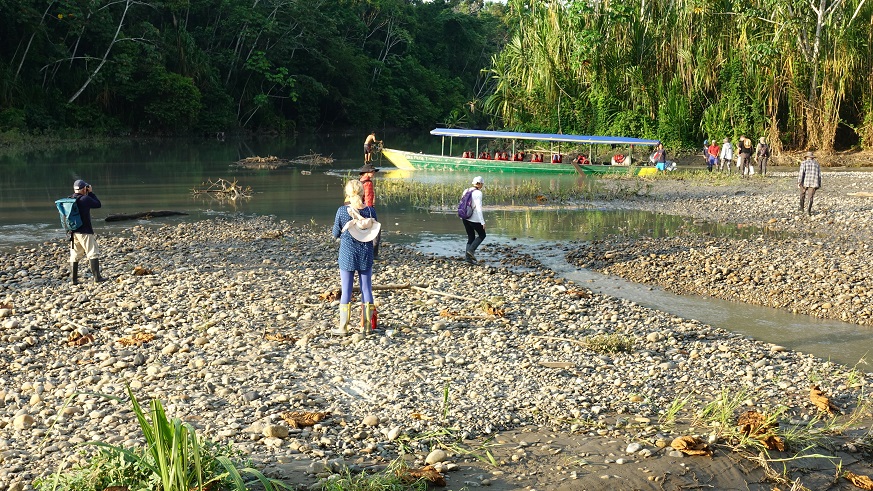 We set off early today, hoping for a glimpse of the elusive jaguar, one of the
Amazon’s most magnificent creatures. The Manu River offers excellent wildlife
viewing in the morning, with possible sightings of tapirs, anteaters, anacondas and three-toed sloths.
After around four hours travelling downstream, we reach the Limonal checkpoint,
where we take a short walk through the rainforest in search of some of the monkey species that inhabit the area.
Our Indigenous nature guide introduces us to the basics of the rainforest
ecosystem and points out some of the medicinal plants traditionally used by
Indigenous communities. With a little luck, we may even encounter a group of
peccaries, a wild pig species native to the region.
We set off early today, hoping for a glimpse of the elusive jaguar, one of the
Amazon’s most magnificent creatures. The Manu River offers excellent wildlife
viewing in the morning, with possible sightings of tapirs, anteaters, anacondas and three-toed sloths.
After around four hours travelling downstream, we reach the Limonal checkpoint,
where we take a short walk through the rainforest in search of some of the monkey species that inhabit the area.
Our Indigenous nature guide introduces us to the basics of the rainforest
ecosystem and points out some of the medicinal plants traditionally used by
Indigenous communities. With a little luck, we may even encounter a group of
peccaries, a wild pig species native to the region.
 We then continue upstream along the Alto Madre de Dios River back to Boca Manu.
After three days in the rainforest without one, that cold beer will taste particularly good tonight!
We then continue upstream along the Alto Madre de Dios River back to Boca Manu.
After three days in the rainforest without one, that cold beer will taste particularly good tonight!
Overnight in very basic accommodation in the heart of Boca Manu, with 4 shared toilets and 4 shared showers. Single rooms are not available. (Full board)
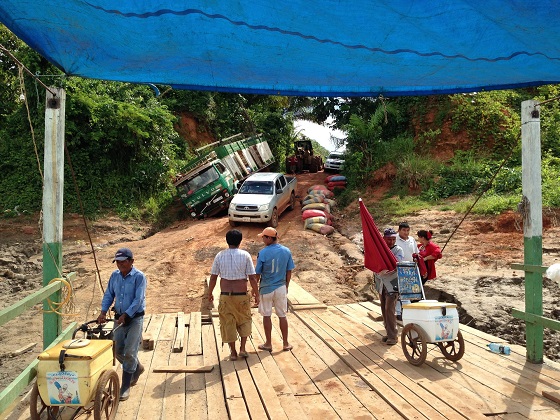
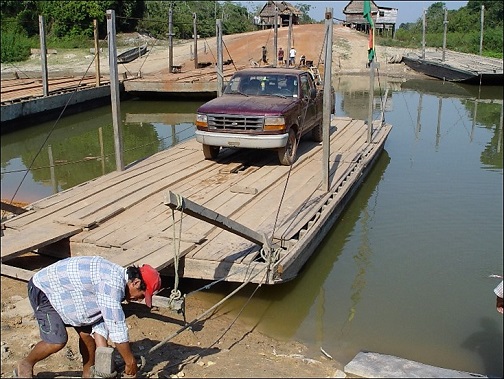 After breakfast, we travel past illegal river gold-mining operations to the
village of Colorado. From here, we change vehicles several times as we
continue by jeep, adventurous ferries and basic minibuses, mostly along unpaved roads.
The journey is long and bumpy. Little seems to have changed since the first
pioneers settled this remote gold-mining town around 30 years ago. As we approach
our destination, the mining town of Huepetuhe, the signs of a gold rush become
increasingly visible. In Huepetuhe itself, the muddy roads seem to lead in
only two directions: towards the mines or away from them.
After breakfast, we travel past illegal river gold-mining operations to the
village of Colorado. From here, we change vehicles several times as we
continue by jeep, adventurous ferries and basic minibuses, mostly along unpaved roads.
The journey is long and bumpy. Little seems to have changed since the first
pioneers settled this remote gold-mining town around 30 years ago. As we approach
our destination, the mining town of Huepetuhe, the signs of a gold rush become
increasingly visible. In Huepetuhe itself, the muddy roads seem to lead in
only two directions: towards the mines or away from them.
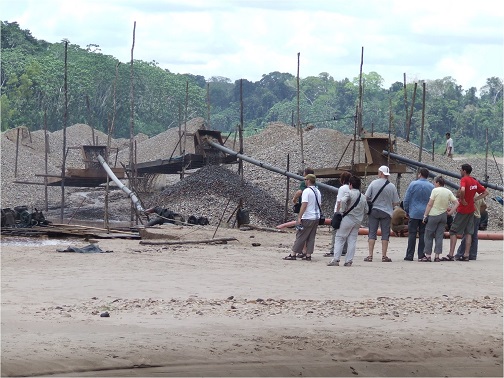 In between are chicken restaurants, mechanics' workshops, gold-buying shops,
spare-parts stores for heavy machinery, public showers and toilets – as
well as our simple accommodation in the heart of this extraordinary gold-mining
settlement. An estimated 40,000 miners live here, the vast majority working illegally.
In between are chicken restaurants, mechanics' workshops, gold-buying shops,
spare-parts stores for heavy machinery, public showers and toilets – as
well as our simple accommodation in the heart of this extraordinary gold-mining
settlement. An estimated 40,000 miners live here, the vast majority working illegally.
Overnight in a simple hotel in Huepetuhe, in a double or single room with private shower/WC. (Breakfast)
Please note: The vehicles used today comply with local legal requirements but may not meet European safety standards. For example, some vehicles may not have seat belts on the rear seats
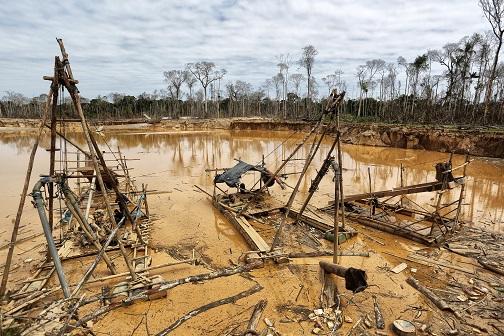 In the morning, we drive into the nearby hills, where heavy trucks transport
earth from the mines. The extracted material is treated with mercury to separate
the gold, leaving behind vast piles of contaminated waste. From the top of one of
these spoil heaps, we gain a sobering view of the environmental devastation in the
middle of this enormous rainforest region. It is hard to imagine that rivers
once flowed through this landscape and lush vegetation covered the hills.
We take the opportunity to talk to gold miners and gold buyers, gaining a
personal insight into the realities behind the gold rush.
In the morning, we drive into the nearby hills, where heavy trucks transport
earth from the mines. The extracted material is treated with mercury to separate
the gold, leaving behind vast piles of contaminated waste. From the top of one of
these spoil heaps, we gain a sobering view of the environmental devastation in the
middle of this enormous rainforest region. It is hard to imagine that rivers
once flowed through this landscape and lush vegetation covered the hills.
We take the opportunity to talk to gold miners and gold buyers, gaining a
personal insight into the realities behind the gold rush.
Later in the afternoon, we reach the Trans-Oceanic Highway, completed in 2019
and linking the Atlantic and Pacific coasts. From here, we continue to the small,
lively city of Puerto Maldonado, where motorcycles and tuk-tuks dominate the streets.
We spend the late afternoon relaxing by the hotel pool with a few cocktails
before heading to the main square for dinner.
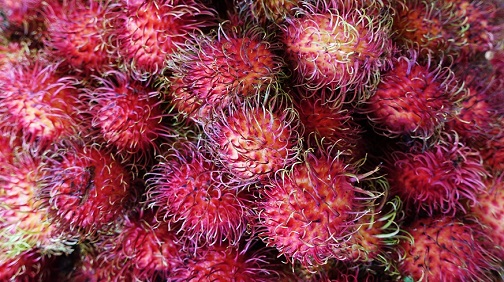 Those who wish can round off the evening at a local dance bar, where we may
encounter a traditional live cumbia band accompanied by energetic dancers.
Those who wish can round off the evening at a local dance bar, where we may
encounter a traditional live cumbia band accompanied by energetic dancers.
Cumbia originated in Barranquilla on Colombia’s Caribbean coast and
combines complex African-influenced rhythms with melodies shaped by
Spanish musical traditions. Today, it is one of the most popular musical
styles in the Amazon region and can be heard almost everywhere.
Overnight in Puerto Maldonado at the 3-star Hotel Cabaña Quinta or a similar hotel. (Breakfast)
Please note: The vehicles used today comply with local legal requirements but
may not meet European safety standards. For example, some vehicles may not have seat belts on the rear seats.
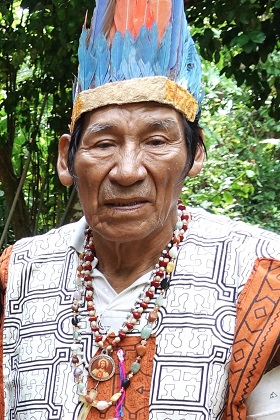 In the morning, we visit the authentic local market of Puerto Maldonado,
where gold miners, Indigenous communities, Brazil-nut collectors and other
rainforest residents come to find everything they need for everyday life.
It is a fascinating opportunity to experience the region far beyond the usual tourist routes.
After lunch, we continue through Tambopata National Park to visit a shaman
living in a remote part of the rainforest. Here, we gain an insight into
traditional Indigenous knowledge and the medicinal plants of the jungle.
We spend the night right next to the shaman, sleeping in our camp beds with
mattresses, warm sleeping bags and mosquito nets. A simple pit toilet and
outdoor shower complete this truly adventurous overnight experience.
In the morning, we visit the authentic local market of Puerto Maldonado,
where gold miners, Indigenous communities, Brazil-nut collectors and other
rainforest residents come to find everything they need for everyday life.
It is a fascinating opportunity to experience the region far beyond the usual tourist routes.
After lunch, we continue through Tambopata National Park to visit a shaman
living in a remote part of the rainforest. Here, we gain an insight into
traditional Indigenous knowledge and the medicinal plants of the jungle.
We spend the night right next to the shaman, sleeping in our camp beds with
mattresses, warm sleeping bags and mosquito nets. A simple pit toilet and
outdoor shower complete this truly adventurous overnight experience.
Overnight at the shaman’s camp. (Full board)
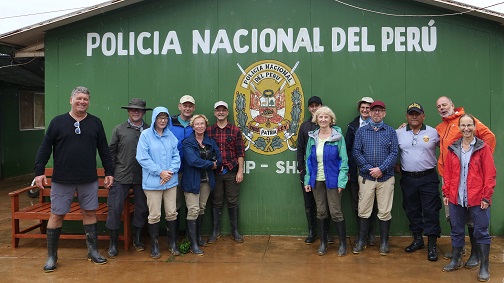 After a relaxed breakfast, we hand our main luggage over to the boat team,
which we will meet again in Bolivia later in the day. Travelling with hand
luggage only, we first follow the Trans-Oceanic Highway to the Peruvian
border post, where we obtain the necessary exit stamp.
We then continue deep into the rainforest towards Bolivia, until our
minibus can go no further. From here, we have to walk between 200 metres
and 2 kilometres, depending on the conditions, to reach a small and
completely isolated Bolivian police and military post. The officers
inspect us with understandable curiosity – on average, only around two people cross this remote border each month.
After a relaxed breakfast, we hand our main luggage over to the boat team,
which we will meet again in Bolivia later in the day. Travelling with hand
luggage only, we first follow the Trans-Oceanic Highway to the Peruvian
border post, where we obtain the necessary exit stamp.
We then continue deep into the rainforest towards Bolivia, until our
minibus can go no further. From here, we have to walk between 200 metres
and 2 kilometres, depending on the conditions, to reach a small and
completely isolated Bolivian police and military post. The officers
inspect us with understandable curiosity – on average, only around two people cross this remote border each month.
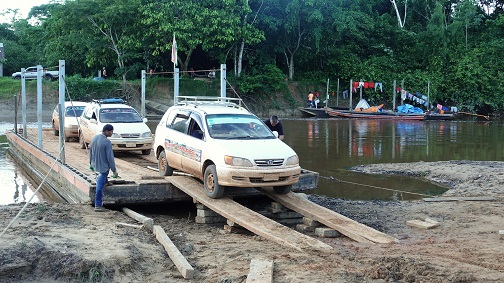 At a second border checkpoint, our passports are stamped. Welcome to Bolivia!
We continue along roads that are only partly paved until we reach a small
supply village on the Río Madre de Dios. Our boat team is already waiting for us with our luggage and our camp beds.
After such an eventful day, a cold beer in one of the local farmers' and
gold miners' bars is particularly welcome. Meanwhile, our cook has already
fired up the grill and is preparing delicious jungle specialties for dinner.
At a second border checkpoint, our passports are stamped. Welcome to Bolivia!
We continue along roads that are only partly paved until we reach a small
supply village on the Río Madre de Dios. Our boat team is already waiting for us with our luggage and our camp beds.
After such an eventful day, a cold beer in one of the local farmers' and
gold miners' bars is particularly welcome. Meanwhile, our cook has already
fired up the grill and is preparing delicious jungle specialties for dinner.
Overnight on our camp beds or in very basic accommodation in the village, in double rooms with
4 shared toilets and 4 shared showers. Please note: Single rooms are not available. (Full board)
Please note: The vehicles used today comply with local legal requirements but
may not meet European safety standards. For example, some vehicles may not have seat belts on the rear seats.
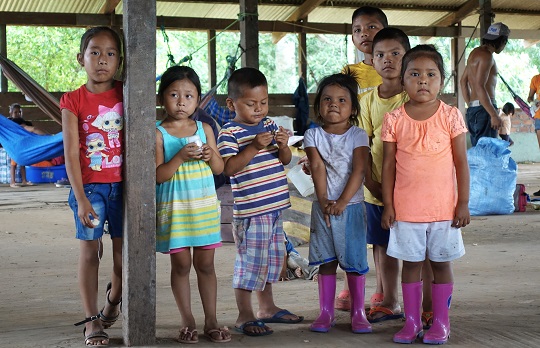 Early in the morning, we continue our river expedition by boat along the edge of the
Manupiri and Humayta nature reserves, travelling along the Río Madre de Dios.
We stop at a Brazil-nut settlement directly on the river, where the local
manager explains how these highly prized nuts are harvested.
The Brazil-nut tree, which can grow 55–60 metres tall and live for up to
300 years, belongs to the Lecythidaceae family and cannot be cultivated commercially.
Its large, hard fruits, measuring around 10–15 cm, contain 10–25 of the familiar,
delicious Brazil nuts. During the rainy season, around 5,000 collectors gather
the fallen nuts from the forest floor and transport them along narrow jungle trails,
sometimes for up to 10 km, to collection warehouses.
Early in the morning, we continue our river expedition by boat along the edge of the
Manupiri and Humayta nature reserves, travelling along the Río Madre de Dios.
We stop at a Brazil-nut settlement directly on the river, where the local
manager explains how these highly prized nuts are harvested.
The Brazil-nut tree, which can grow 55–60 metres tall and live for up to
300 years, belongs to the Lecythidaceae family and cannot be cultivated commercially.
Its large, hard fruits, measuring around 10–15 cm, contain 10–25 of the familiar,
delicious Brazil nuts. During the rainy season, around 5,000 collectors gather
the fallen nuts from the forest floor and transport them along narrow jungle trails,
sometimes for up to 10 km, to collection warehouses.
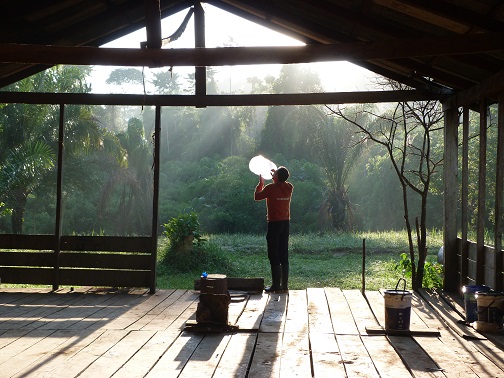 In the early afternoon, we reach another Brazil-nut settlement.
During a two-hour jungle hike, we marvel at the enormous Brazil-nut
trees before cooling off in a small river beneath a waterfall.
In the early afternoon, we reach another Brazil-nut settlement.
During a two-hour jungle hike, we marvel at the enormous Brazil-nut
trees before cooling off in a small river beneath a waterfall.
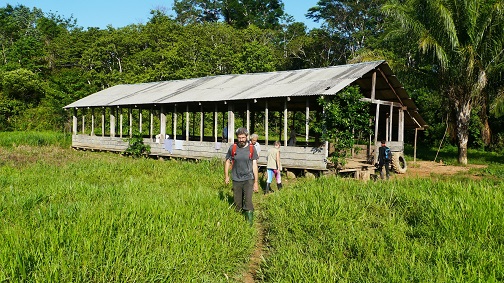 Tonight, we sleep on our camp beds inside the storage warehouse of the Brazil-nut collection centre.
Shower facilities are wonderfully basic: we can cool off beneath a small waterfall,
in the river or with water drawn from a well. A simple shared pit toilet is available at the camp manager’s house.
Please note: Single rooms are not available. (Full board)
Tonight, we sleep on our camp beds inside the storage warehouse of the Brazil-nut collection centre.
Shower facilities are wonderfully basic: we can cool off beneath a small waterfall,
in the river or with water drawn from a well. A simple shared pit toilet is available at the camp manager’s house.
Please note: Single rooms are not available. (Full board)
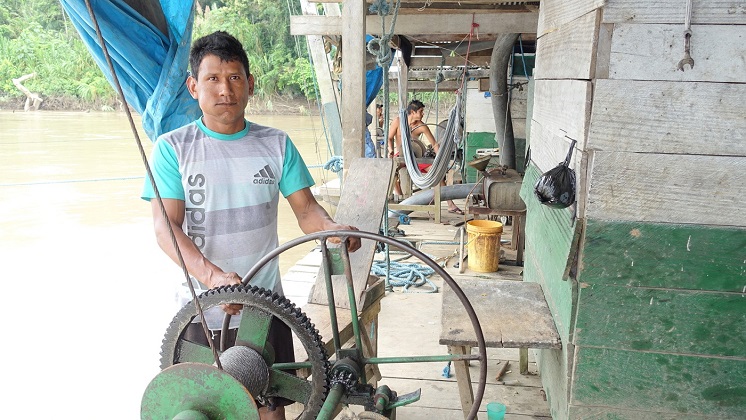 Today, we continue our river expedition by boat along the Río Madre
de Dios to several small-scale gold-mining sites. We board one of the miners’
boats and learn firsthand how they extract gold from the river and what everyday
life is like for the miners and their families living in this remote part of the Amazon.
If the school in the Brazil-nut and gold-mining settlement of América is open,
we will visit it as well. Our travel guide brings educational materials to support
the local teacher. Those who wish may also donate gently used children's clothing.
In the early afternoon, we reach the small Bolivian supply village of El Sena,
where we say goodbye to our much-loved expedition boat. After a thorough inspection
by the military post, ensuring that we are not taking gold out of the country and
that we have entered Bolivia legally, we continue to a small hotel located directly on the Plaza Principal.
Today, we continue our river expedition by boat along the Río Madre
de Dios to several small-scale gold-mining sites. We board one of the miners’
boats and learn firsthand how they extract gold from the river and what everyday
life is like for the miners and their families living in this remote part of the Amazon.
If the school in the Brazil-nut and gold-mining settlement of América is open,
we will visit it as well. Our travel guide brings educational materials to support
the local teacher. Those who wish may also donate gently used children's clothing.
In the early afternoon, we reach the small Bolivian supply village of El Sena,
where we say goodbye to our much-loved expedition boat. After a thorough inspection
by the military post, ensuring that we are not taking gold out of the country and
that we have entered Bolivia legally, we continue to a small hotel located directly on the Plaza Principal.
Overnight at the very basic Alojamiento Amanecer in El Sena, in a double or single room with private shower/WC. (Breakfast)
Weather permitting, we set off in the morning on the open cargo bed of a
pickup truck or truck, travelling for around three hours through the
rainforest to the colonial town of Riberalta. In case of bad weather,
we use one of the fast-moving local minibuses instead.
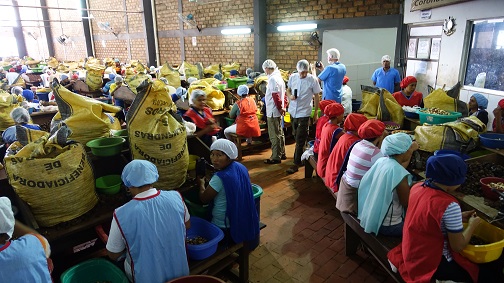
Shortly after arriving in Riberalta, we visit a Brazil-nut processing plant.
Hundreds of tonnes of these precious nuts are cracked, washed and carefully
sorted by hand according to quality by numerous workers. Alongside rubber
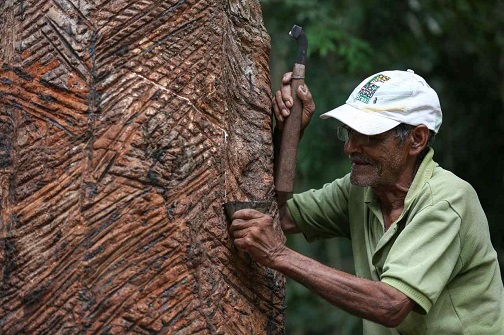
from the region’s rubber trees and tropical timber, Brazil nuts remain one
of the most important sources of income for the local population.
In the evening, we head to the main square, where locals gather for their
evening entertainment, buzzing around the plaza on small mopeds and motorcycles.
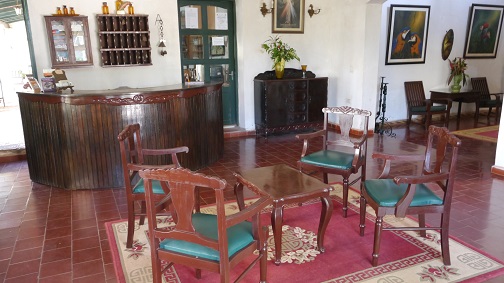
Overnight in Riberalta at the 2-star Hotel Colonial, a charming former colonial
residence of a local rubber baron, or a similar hotel. (Breakfast)
Please note: The vehicles used today comply with local legal requirements but may not meet European safety standards.
For example, some vehicles may not have seat belts on the rear seats.
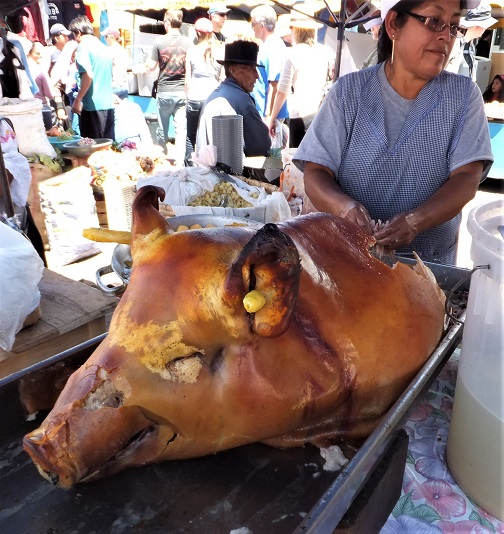 In the morning, we take a short walking tour of Riberalta, a town shaped by
colonial-style buildings and Anglo-Saxon-inspired houses dating from the
18th and 19th centuries. Founded by a Swiss and a German settler,
Riberalta lies directly opposite the confluence of two mighty rivers:
the Río Madre de Dios and the Río Beni. Outside the town centre,
some buildings are still constructed from wood and clay, with roofs made from palm leaves.
Riberalta once became an important rubber-trading centre, but its period
of prosperity was unfortunately short-lived. The invention of synthetic
rubber brought this era to an end. Today, the local economy relies
mainly on the collection and processing of Brazil nuts and the region’s large tropical-timber sawmills.
In the morning, we take a short walking tour of Riberalta, a town shaped by
colonial-style buildings and Anglo-Saxon-inspired houses dating from the
18th and 19th centuries. Founded by a Swiss and a German settler,
Riberalta lies directly opposite the confluence of two mighty rivers:
the Río Madre de Dios and the Río Beni. Outside the town centre,
some buildings are still constructed from wood and clay, with roofs made from palm leaves.
Riberalta once became an important rubber-trading centre, but its period
of prosperity was unfortunately short-lived. The invention of synthetic
rubber brought this era to an end. Today, the local economy relies
mainly on the collection and processing of Brazil nuts and the region’s large tropical-timber sawmills.
 Traffic in Riberalta is dominated by the ubiquitous buzzing mopeds.
Almost all of the town’s nearly 80,000 inhabitants seem to own one.
Motorcycles use the entire width of the roads, helmets are not compulsory,
and three-wheeled cargo motorcycles are even used to transport passengers.
We visit the brick-built cathedral and the historic German-made steamship
“Tahuamanu”, manufactured in Germany in 1889. Delivered in individual parts,
it was the first and only steamship in the region. The vessel was initially
used by the trading company Orthon & Co. to transport rubber and was later
used by the army as a troop carrier.
Traffic in Riberalta is dominated by the ubiquitous buzzing mopeds.
Almost all of the town’s nearly 80,000 inhabitants seem to own one.
Motorcycles use the entire width of the roads, helmets are not compulsory,
and three-wheeled cargo motorcycles are even used to transport passengers.
We visit the brick-built cathedral and the historic German-made steamship
“Tahuamanu”, manufactured in Germany in 1889. Delivered in individual parts,
it was the first and only steamship in the region. The vessel was initially
used by the trading company Orthon & Co. to transport rubber and was later
used by the army as a troop carrier.
Overnight in Riberalta at the 2-star Hotel Colonial, a stylish former colonial
residence of a local rubber baron, or a similar hotel. (Breakfast)
Please note: The visit to the Brazil-nut processing plant in Riberalta is
not possible in November and December and possibly also in January, as all factories are closed during this period.
 Today, we enter the third country of our expedition: Brazil! By taxi,
we travel to the Bolivian town of Guayaramerín, situated directly on the
Bolivian-Brazilian border river, the Río Mamoré. Our first stop is at the
informal street money changers, where we can exchange our Bolivianos for Brazilian Reais.
After completing the Bolivian exit formalities, we cross the river by small
ferry to Guajará-Mirim on the Brazilian side. We then head straight to the
Polícia Federal to obtain our entry stamp for Brazil.
Here, in the remote state of Rondônia, where extensive deforestation and
forest fires were commonplace until just a few years ago, we enjoy some excellent
Brazilian beef for lunch before continuing by taxi to Porto Velho. Along the way,
we can still see the scars of rainforest that was burned and cleared many years ago.
Today, around 80% of the cleared agricultural land lies unused, awaiting further
cattle farming. Fortunately, this has helped prevent further large-scale
deforestation and slash-and-burn clearing in the region for many years.
Today, we enter the third country of our expedition: Brazil! By taxi,
we travel to the Bolivian town of Guayaramerín, situated directly on the
Bolivian-Brazilian border river, the Río Mamoré. Our first stop is at the
informal street money changers, where we can exchange our Bolivianos for Brazilian Reais.
After completing the Bolivian exit formalities, we cross the river by small
ferry to Guajará-Mirim on the Brazilian side. We then head straight to the
Polícia Federal to obtain our entry stamp for Brazil.
Here, in the remote state of Rondônia, where extensive deforestation and
forest fires were commonplace until just a few years ago, we enjoy some excellent
Brazilian beef for lunch before continuing by taxi to Porto Velho. Along the way,
we can still see the scars of rainforest that was burned and cleared many years ago.
Today, around 80% of the cleared agricultural land lies unused, awaiting further
cattle farming. Fortunately, this has helped prevent further large-scale
deforestation and slash-and-burn clearing in the region for many years.
 In the afternoon, we reach our small and very basic city hotel in Porto Velho,
the capital of Rondônia with around 380,000 inhabitants. The city has a unique location,
perched on a cliff high above the Río Madeira, one of the Amazon’s major tributaries.
Porto Velho was founded in 1914 as a river port and is still an important
trading centre for farmers and rainforest communities from the surrounding region.
In the afternoon, we reach our small and very basic city hotel in Porto Velho,
the capital of Rondônia with around 380,000 inhabitants. The city has a unique location,
perched on a cliff high above the Río Madeira, one of the Amazon’s major tributaries.
Porto Velho was founded in 1914 as a river port and is still an important
trading centre for farmers and rainforest communities from the surrounding region.
We visit the old railway station and historic locomotives dating back to
the era of the rubber barons. The construction of the railway more than 130
years ago marked the beginning of systematic settlement in what was previously largely untouched rainforest around Porto Velho.
We stroll through the local market and walk to the small port, where our cargo
ship is already being loaded. We take a first curious look at our vessel and check
tomorrow’s departure time directly with the captain. Those who wish can enjoy their
first authentic Brazilian caipirinha and perhaps even dance the evening away.
Overnight in Porto Velho at the 2-star Hotel Regina or a similar hotel. (Breakfast)
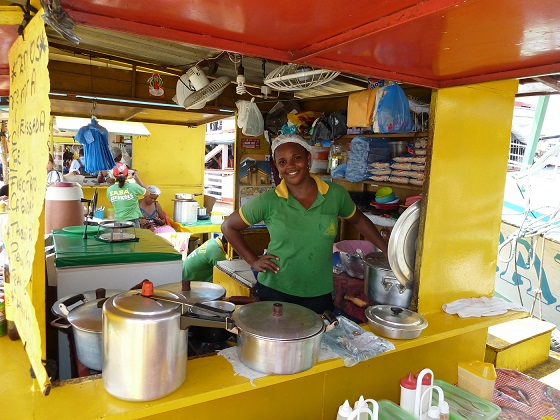 Right after breakfast (café da manhã), featuring baguette, regional cheese and
cold cuts, cheese balls, boiled cassava, fresh fruit juices and tropical fruits,
as well as delicious Brazilian coffee and tea, we head to the nearby port.
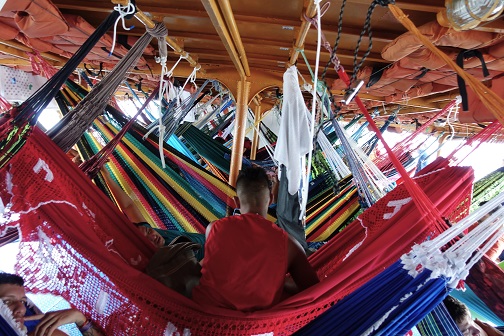
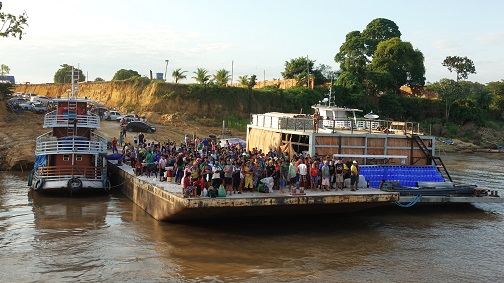
The loading of cargo from countless trucks seems to go on forever. We board a
cargo ship bound for Manicoré. The competition for the best spots is already underway.
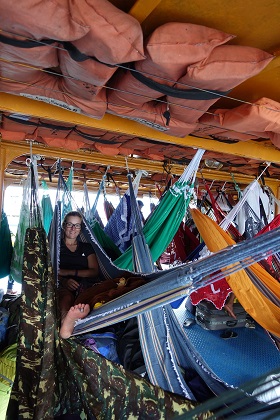
Once we have hung our hammocks on the upper hammock deck, we watch as dozens of
hardworking hands load hundreds of tonnes of different goods and skilfully
arrange them inside the ship within just a few hours. The lower deck is reserved entirely for the cargo.
Right after breakfast (café da manhã), featuring baguette, regional cheese and
cold cuts, cheese balls, boiled cassava, fresh fruit juices and tropical fruits,
as well as delicious Brazilian coffee and tea, we head to the nearby port.
The loading of cargo from countless trucks seems to go on forever. We board a
cargo ship bound for Manicoré. The competition for the best spots is already underway.
Once we have hung our hammocks on the upper hammock deck, we watch as dozens of
hardworking hands load hundreds of tonnes of different goods and skilfully
arrange them inside the ship within just a few hours. The lower deck is reserved entirely for the cargo.
 The loading continues as farmers arrive with yet another delivery. It is fascinating
to watch – seeing the enormous effort and manpower required to load bananas,
oranges and other fruit gives us a whole new appreciation for the food we usually take for granted.
The loading continues as farmers arrive with yet another delivery. It is fascinating
to watch – seeing the enormous effort and manpower required to load bananas,
oranges and other fruit gives us a whole new appreciation for the food we usually take for granted.
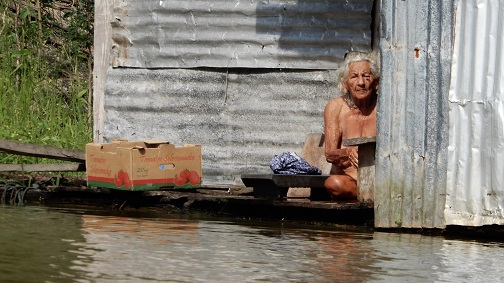
Here, contact with the local population is as close and authentic as it gets,
and our travel guide is happy to help translate the many interesting conversations.
We eat together with the local passengers, enjoying whatever the ship's cook prepares –
usually rice, beans and salad, accompanied by meat or chicken. The culinary
choices are certainly simple, but all part of the authentic experience.
There is only one scheduled stop along the way: Humaitá, where the ship is quickly
surrounded by local vendors offering everything from snacks to mobile-phone charging cables.
Overnight in hammocks on board the cargo ship. (Full board)
Today, we continue our journey north along the Río Madeira, travelling at a
leisurely pace of around 20 km/h through vast stretches of uninhabited Amazon rainforest.
The upper deck has become the gathering place for all 150–200 passengers on board.
Brazilian popular music provides a constant soundtrack as we share a cold Skol,
Brahma or Antarctica – some of the country’s best-known beer brands – and
enjoy the relaxed atmosphere of life on the river.
Along the way, small-scale farmers occasionally join the ship. They are collected
from the riverbank by the ship’s tender and, even while we are moving, climb
aboard together with their goods. These everyday encounters offer a fascinating
glimpse into how people live and travel along the remote waterways of the Amazon.
Overnight in hammocks on board the cargo ship (depending on water levels) or at Hotel BonBon in Manicoré. (Breakfast)
Around midday, we reach Manicoré, located on the right bank of the Río Madeira,
just below the mouth of the Río Manicoré. This small town lies deep in the heart
of the Amazon rainforest and can only be reached by several days of river travel or by air from Manaus.
After one or two nights sleeping in hammocks, it feels wonderful to enjoy a
real hotel bed again. We also take the opportunity to experience the lively
atmosphere of the town, where the streets are bustling with people, many of them from Indigenous communities.
Overnight at Hotel BonBon in Manicoré. (Breakfast)
Around midday, we take moto-taxis to the town’s tiny airfield, which is
served by a small aircraft only three times a week. After an almost two-hour
flight over the vast Amazon rainforest, we arrive in Manaus, the capital of the state of Amazonas.
In the evening, we celebrate our return to civilization with a typical
Brazilian caipirinha in one of the small samba bars in front of the beautifully
illuminated Teatro Amazonas. The bar is a favourite among locals, and tonight
regional musicians take turns joining the band, keeping the music going and
the entire bar dancing – with us right in the middle of it!
Overnight in Manaus at the Hotel Saint Paul, a comfortable hotel close to the opera house –
what a luxury after the past few days deep in the rainforest! (Breakfast)
 The name Manaus goes back to the Indigenous Manaos people, who settled
in the area around 1650. In 1669, Portuguese colonists built a fort here in
the middle of the rainforest. Today, Manaus is home to more than two million
people and can only be reached by boat or plane.
Today, we take a walking tour through the historic centre of Manaus and step
back into the city’s Belle Époque, its golden age when Manaus was known as the
Paris of the Tropics.
The name Manaus goes back to the Indigenous Manaos people, who settled
in the area around 1650. In 1669, Portuguese colonists built a fort here in
the middle of the rainforest. Today, Manaus is home to more than two million
people and can only be reached by boat or plane.
Today, we take a walking tour through the historic centre of Manaus and step
back into the city’s Belle Époque, its golden age when Manaus was known as the
Paris of the Tropics.
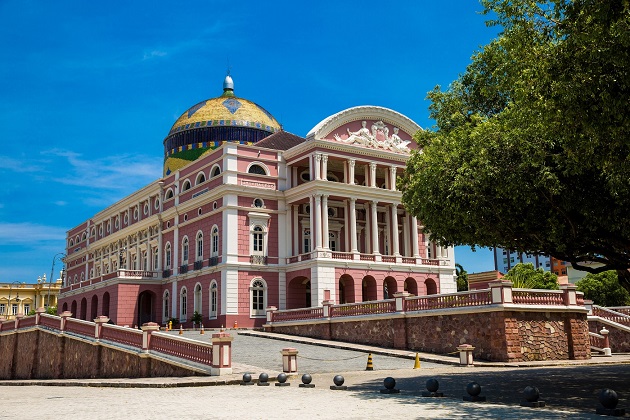
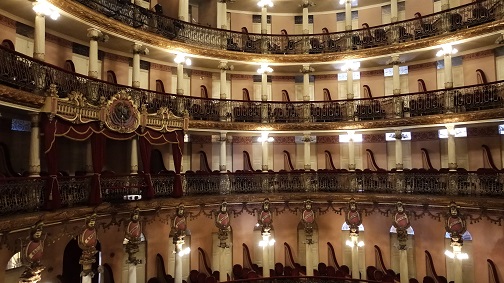
 The finest example of this era is the Teatro Amazonas,
the magnificent and world-famous Renaissance-style opera house.
Completed in 1896, the opera house is a remarkable testimony to the prosperity
of the region in the 19th century, when Brazil dominated the global rubber trade.
At the height of the rubber boom, Manaus was a city of extraordinary luxury and progress.
While horse-drawn trams were still operating in parts of the Americas, European
architects and engineers were already planning an electric tramway in Manaus.
The sudden departure of the rubber barons brought this era of luxury and progress to
an abrupt end. The magnificent opera house, however, survived as a lasting reminder of those remarkable times.
The finest example of this era is the Teatro Amazonas,
the magnificent and world-famous Renaissance-style opera house.
Completed in 1896, the opera house is a remarkable testimony to the prosperity
of the region in the 19th century, when Brazil dominated the global rubber trade.
At the height of the rubber boom, Manaus was a city of extraordinary luxury and progress.
While horse-drawn trams were still operating in parts of the Americas, European
architects and engineers were already planning an electric tramway in Manaus.
The sudden departure of the rubber barons brought this era of luxury and progress to
an abrupt end. The magnificent opera house, however, survived as a lasting reminder of those remarkable times.
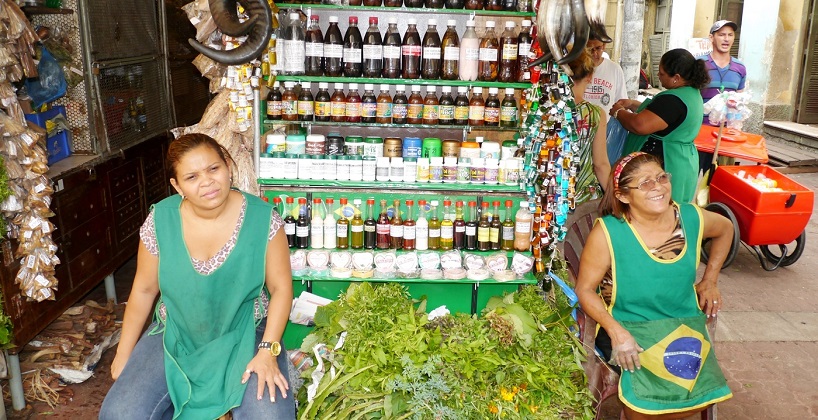
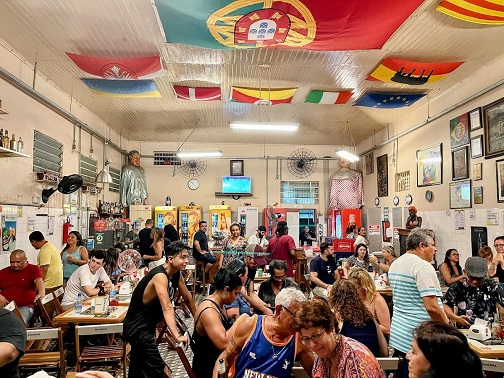 Our exploration continues through Manaus, the vibrant and multicultural “gateway to the Amazon.”
We visit the Mercado Municipal Adolpho Lisboa, built in 1883 on the banks of the Río Negro,
where colourful stalls offer an abundance of fruits, spices and regional products.
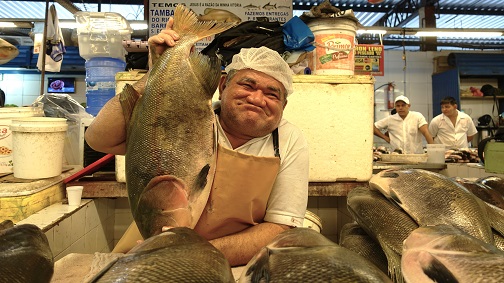
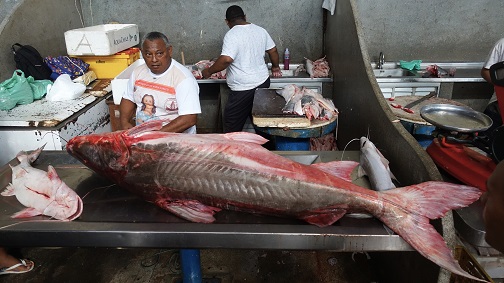
At the nearby fish market, we marvel at the enormous variety and impressive size of the fish caught in the Amazon.
A short boat excursion takes us to one of the region’s most fascinating natural
phenomena: the Meeting of the Waters, where the Río Negro and Río Solimões converge.
Our exploration continues through Manaus, the vibrant and multicultural “gateway to the Amazon.”
We visit the Mercado Municipal Adolpho Lisboa, built in 1883 on the banks of the Río Negro,
where colourful stalls offer an abundance of fruits, spices and regional products.
At the nearby fish market, we marvel at the enormous variety and impressive size of the fish caught in the Amazon.
A short boat excursion takes us to one of the region’s most fascinating natural
phenomena: the Meeting of the Waters, where the Río Negro and Río Solimões converge.
 Around 10 km from Manaus, the dark waters of the Río Negro, flowing from Venezuela,
meet the lighter, sediment-rich waters of the Río Solimões, which originate in the rainforest regions of Peru, Ecuador and Colombia.
Because the two rivers differ in temperature, colour and flow speed, their waters
remain visibly separated for several kilometres before gradually mixing. From this
point onward, the mighty river is known as the Amazonas.
Around 10 km from Manaus, the dark waters of the Río Negro, flowing from Venezuela,
meet the lighter, sediment-rich waters of the Río Solimões, which originate in the rainforest regions of Peru, Ecuador and Colombia.
Because the two rivers differ in temperature, colour and flow speed, their waters
remain visibly separated for several kilometres before gradually mixing. From this
point onward, the mighty river is known as the Amazonas.
Overnight in Manaus at Hotel Saint Paul or a similar hotel. (Breakfast)
Today, we say goodbye to South America and to an extraordinary
journey that will remain with us for a lifetime.
After breakfast, we transfer to Manaus Airport, where our flight back to Europe awaits us.
(Breakfast included)