
Welcome to the agent-area of . Please select your name from the list below and you can access your personal information immediately!
Welcome to the agent-area.
Do you want to ...
Hello! You can create your own login below.
You successfully logged out. If you need access to the protected area again, you can login again at any time.
Greetings from Cuzco,
The Otto's Tours Team
Agricultural Discovery Tour
Potatoes, corn, oca, olluco, wheat, cassava, onions, alpaca and quinoa
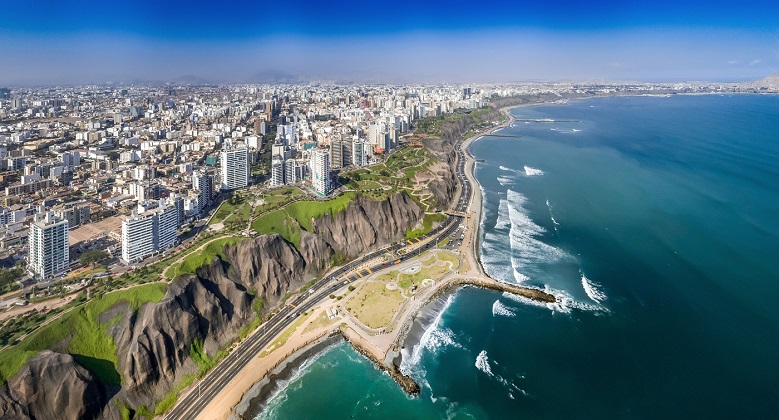 Welcome to Peru! Lima, the country’s capital, is home to more than 8 million people and by far
the largest city in Peru. Each of its districts has its own character, stories and attractions.
Just a few years after its foundation, Lima became—alongside Mexico City—one of the most
important cities of the Spanish colonies in the Americas. Its many colonial treasures,
from grand city palaces and Renaissance and Baroque churches to historic universities and
elegant mansions, still bear witness to the enormous wealth and importance the city once enjoyed.
A fascinating introduction to Peru and the starting point of our journey into the country’s agricultural heartland.
Welcome to Peru! Lima, the country’s capital, is home to more than 8 million people and by far
the largest city in Peru. Each of its districts has its own character, stories and attractions.
Just a few years after its foundation, Lima became—alongside Mexico City—one of the most
important cities of the Spanish colonies in the Americas. Its many colonial treasures,
from grand city palaces and Renaissance and Baroque churches to historic universities and
elegant mansions, still bear witness to the enormous wealth and importance the city once enjoyed.
A fascinating introduction to Peru and the starting point of our journey into the country’s agricultural heartland.
Our overnight stay will be at the ***Hotel Centro by Casa Andina Standard Benavides or equivalent in Lima (No meals included)
Today we explore Lima’s pre-Hispanic, colonial and modern heritage on a city tour through
its historic and contemporary districts. We begin in the heart of the city at Plaza Mayor,
surrounded by the imposing Cathedral, the Archbishop’s Palace and the Government Palace.
Inside the cathedral lies the tomb of Francisco Pizarro, the Spanish conquistador who founded Lima.
We continue to the famous San Francisco Monastery, renowned for its historic library and atmospheric underground catacombs.
In the afternoon, we turn our attention to one of Peru’s most important agricultural treasures:
the International Potato Center (CIP). Its gene bank houses the world’s largest collection of
potato varieties, with more than 4,500 different varieties preserved in specially cooled storage facilities.
A member of the research team takes us behind the scenes, introducing us to the center’s work and
its projects dedicated to preserving and developing this vital crop.
Our overnight stay will be at the ***Hotel Centro by Casa Andina Benavides or equivalent in Lima (breakfast included)
Today we travel by modern coach towards the northeast, heading into the Chanchamayo
Province and onward to the Andean highlands. Our route takes us through the fertile
Mantaro Valley, an important agricultural region supplying the capital with a remarkable
variety of produce, including beans, peas, corn, oca, olluco, potatoes, wheat, cassava,
onions and a wide range of dairy products.
Along the way, we make plenty of photo stops, taking in the changing landscapes and
allowing ourselves time to gradually acclimatize to the increasing altitude.
As the scenery shifts from fertile valleys to rugged Andean mountains, we get our
first real taste of Peru’s agricultural diversity.
Our overnight stay will be at the San José Parque Ecológico & Lodge Hotel Asociado Casa Andina or equivalent in La Merced (breakfast included)
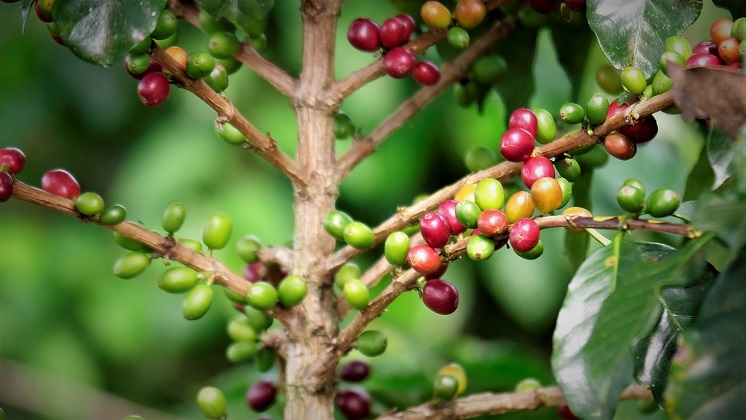 After breakfast, we travel along the eastern slopes of the Cordillera Yanachaga to Villa Rica,
a region with ideal conditions for growing high-quality coffee. Here, the Andes protect the area
from cold maritime influences, while the transition between the highlands and the eastern rainforest
creates an extraordinary diversity of flora and fauna. Dense jungle covers much of the region,
making some communities difficult to reach by road.
Small-scale coffee farmers have joined forces in a cooperative, with each grower cultivating an
average of just two hectares with great care and a strong commitment to social and environmental
responsibility. Individually, these small farms would produce too little for direct export, but
together they harvest around 280 sacks of Arabica coffee per year, each weighing 69 kg. The
cooperative gives otherwise isolated communities access to international markets and a reliable
source of income. Organic fertilization and avoiding pesticides are also important elements in protecting the region’s biodiversity.
We take a close look at the coffee laboratory, where quality is carefully assessed, as
well as the processing facility, where the golden green coffee beans are selected and prepared
for export. We also visit Moali Laboratorio de Café, where the raw coffee is subjected to further quality controls.
In the afternoon, one of the local coffee farms welcomes us for an insight into the entire
journey of coffee—from the plant to the finished bean, known locally as the “green gold of Villa Rica.”
After the tour, the coffee grower and his family invite us to a tasting, giving us the perfect
opportunity to discover the aromas and character of locally grown Arabica.
After breakfast, we travel along the eastern slopes of the Cordillera Yanachaga to Villa Rica,
a region with ideal conditions for growing high-quality coffee. Here, the Andes protect the area
from cold maritime influences, while the transition between the highlands and the eastern rainforest
creates an extraordinary diversity of flora and fauna. Dense jungle covers much of the region,
making some communities difficult to reach by road.
Small-scale coffee farmers have joined forces in a cooperative, with each grower cultivating an
average of just two hectares with great care and a strong commitment to social and environmental
responsibility. Individually, these small farms would produce too little for direct export, but
together they harvest around 280 sacks of Arabica coffee per year, each weighing 69 kg. The
cooperative gives otherwise isolated communities access to international markets and a reliable
source of income. Organic fertilization and avoiding pesticides are also important elements in protecting the region’s biodiversity.
We take a close look at the coffee laboratory, where quality is carefully assessed, as
well as the processing facility, where the golden green coffee beans are selected and prepared
for export. We also visit Moali Laboratorio de Café, where the raw coffee is subjected to further quality controls.
In the afternoon, one of the local coffee farms welcomes us for an insight into the entire
journey of coffee—from the plant to the finished bean, known locally as the “green gold of Villa Rica.”
After the tour, the coffee grower and his family invite us to a tasting, giving us the perfect
opportunity to discover the aromas and character of locally grown Arabica.
Our overnight stay will be at the San José Parque Ecológico & Lodge Hotel Asociado Casa Andina or equivalent in La Merced (breakfast included)
This morning we travel to Huasahuasi (2,750 m), a highland region renowned for its potato production.
The area’s rich, humid soils provide ideal conditions for growing tubers, making the local potato farmers some of the most productive in Peru.
We visit a local small-scale potato farm, where a campesino introduces us to everyday life in the
community and explains the challenges faced by local farmers. We then walk through the surrounding
fields, where potatoes and vegetables—including beans, olluco and onions—are cultivated and harvested.
Naturally, we have the opportunity to taste some of the locally grown potatoes and cheese.
We also visit nearby farms raising cattle, sheep, goats and horses, providing plenty of
opportunities to meet local farmers and learn more about traditional Andean agriculture.
After lunch, we head to the regional market together with a Peruvian cook. Here, colourful
stalls display dozens of different potato varieties. We select some of them before heading
into the kitchen ourselves to prepare a selection of traditional Peruvian potato dishes for dinner,
including Papa Rellena, Papa a la Huancaína and Causa Rellena.
A day that brings Peru’s most iconic crop from field to market to plate.
Our overnight stay will be at the Hacienda Santa Maria or equivalent in Tarma (breakfast and dinner included)
This morning we travel to the community of San Pedro de Cajas, where agriculture and livestock
farming shape everyday life. Local families cultivate potatoes and raise sheep and alpacas,
while wild vicuña herds roam the surrounding highlands. Women in the community also preserve
traditional weaving skills, creating carpets, blankets, jackets and scarves from alpaca, sheep and vicuña wool.
We visit a traditional handicraft and textile workshop, where some of the finest artisans in
the Junín region demonstrate their skills and explain the techniques and materials behind their work.
In the afternoon, we continue to the Bonbon Plateau, rising to more than 4,000 metres above sea level.
Here, we discover the fields of maca, the famous Andean root often referred to as the “food of the Incas.”
The region is considered one of the historic centres of maca cultivation and is home to an ancient variety
known locally as “maca shihua.” We visit a small-scale farmer who has joined forces with other campesinos
in a cooperative, learning more about cultivation, traditional knowledge and the challenges of farming at such extreme altitude.
Our overnight stay will be at the Hacienda Santa Maria or equivalent in Tarma (breakfast included)
This morning, we visit the San José Ecological Park, where we learn about the natural and cultural
heritage of Peru’s central rainforest region. We explore citrus orchards and other highland
fruit plantations before continuing through the park’s impressive forest, home to towering mahogany
trees, ginger, bolaina, heliconias and a remarkable variety of native and ornamental plants.
We then learn more about the “Plant a Tree in Chanchamayo” forest restoration programme, which
supports the regeneration of local forests and biodiversity. As part of the experience, we plant
our own tree and receive a tree-planting certificate as a lasting reminder of our contribution.
After a picnic lunch in the countryside, we return to our accommodation.
Our overnight stay will be at the Hacienda Santa Maria or equivalent in Tarma (breakfast and lunch included)
After breakfast, we transfer to the airport for our flight via Lima to Cusco, the former heart
of the Inca Empire, situated at an impressive 3,460 metres above sea level. A UNESCO World Heritage
Site, Cusco is considered one of the most beautiful cities in Latin America, thanks to its
fascinating blend of colonial architecture and Inca heritage.
We visit the Agricultural Experiment Station (EEAA) Andenes, where researchers conduct studies
and experiments on different varieties of grains and potatoes. An agricultural engineer introduces
us to some of the institute’s research projects, including studies focused on quinoa, one of the
most important traditional crops of the Andes.
We continue to the picturesque Andean village of Chinchero, home to the remains of the royal estate
of Túpac Inca Yupanqui. On the main square, we admire the remarkably preserved Inca stonework before
visiting the beautiful colonial church, which was built directly on ancient Inca foundations.
Our overnight stay will be at the Hotel La Casona de Yucay or equivalent in Sacred Valley (breakfast included)
Early in the morning, we visit the archaeological complex of Moray, believed to have served as an
important agricultural experimentation centre during the Inca period. Four slightly elliptical
terraces, known locally as muyus, form an extraordinary landscape. The largest of these structures
is around 45 metres deep, with each terrace averaging approximately two metres in height.
The impressive design is thought to have created different microclimates, making Moray an ideal place for experimenting with crops.
We then meet the Team Manuel Choqque. Manuel’s family has cultivated potatoes in the historic Sacred
Valley for four generations. He has dedicated his life to preserving and cultivating native potato
varieties and researching the culinary treasures of the Andes. He advises local farmers and communities
and regularly shares his knowledge about this remarkable crop, from its origins to its nutritional value.
Known as the “Potato King” and “Potato Whisperer,” Manuel has cultivated around 350 different
potato varieties on his fields, ranging from deep blue and almost black to golden and beetroot-coloured.
We stroll through a colourful local market, where regional produce is proudly displayed.
Alongside fruit and vegetables, we encounter traditional livestock such as chickens, guinea pigs, ducks, sheep and alpacas.
Afterwards, Manuel and his team invite us into their outdoor kitchen, where they demonstrate how to
prepare classic Peruvian dishes such as Ceviche, Lomo Saltado, Tacu Tacu, Papa a la Huancaína and Causa Rellena.
We learn how to properly cut the fish for ceviche and how to balance the different flavours and ingredients.
Once everything is prepared, we sit down together to enjoy these fresh and authentic Peruvian dishes.
The experience also includes a tasting of fermented beverages made from different Andean tubers, including oca, racacha and mashua.
In the evening, we enjoy dinner at a restaurant where local chefs create exquisite dishes using the incredible
diversity of native potatoes. With hundreds of varieties in an astonishing range of colours,
shapes and textures, the culinary possibilities seem almost endless.
Our overnight stay will be at the Hotel La Casona de Yucay or equivalent in Sacred Valley (breakfast, lunch and dinner included)
In the morning, we reach the Potato Park, a unique agroecological community project jointly
managed by six local villages. Rather than following purely market-oriented principles, the
project focuses on protecting biodiversity, biocultural heritage, community life and spiritual traditions.
Here we discover that potatoes play a much deeper role in Andean culture than simply being a staple food.
Different varieties are traditionally associated with specific occasions and ceremonies: some are eaten
at baptisms, others at weddings – including the aptly named “Bride Potato” – while others are used during
funerals. Some varieties, such as the red Moro Boli, are particularly rich in antioxidants, while others,
like the banana-shaped Ttalaco, are soaked or steamed before being eaten or are even used to produce alcohol.
Following an introduction to the Potato Park and its traditions, we enjoy a tasting of native potato varieties cooked with different types of chilli peppers.
We then visit Destilería Andina, the first distillery in the Sacred Valley. Spirits have long played an
important religious, cultural and economic role in the Andes. Here, we learn about the production of
handcrafted spirits made in small batches, using organic herbs grown on the distillery’s own farm.
Naturally, our visit concludes in the distillery’s tasting room, where we can sample some of its creations.
Our overnight stay will be at the Hotel La Casona de Yucay or equivalent in Sacred Valley (breakfast included)
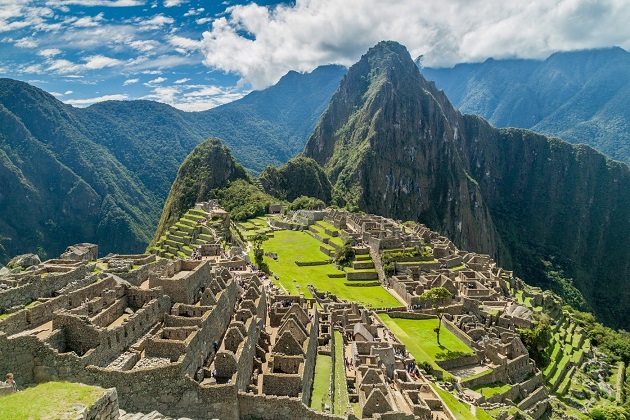 Early in the morning, we travel to the train station in Ollantaytambo, where we board the Andean
train to Aguas Calientes. From there, a winding mountain road takes us up to Machu Picchu.
And then the moment we have been waiting for arrives: at 2,400 metres above sea level, the
legendary citadel suddenly appears before our eyes!
For more than a century, researchers have been fascinated by the question of why the Incas
chose to build such an extraordinary city on the remote mountain ridge of Machu Picchu.
Even more mysterious is why the site was seemingly abandoned soon after its completion and gradually reclaimed by nature.
Before its rediscovery by Hiram Bingham in 1911, Machu Picchu remained largely unknown to the
outside world. Fortunately, it escaped the attention of the Spanish conquistadors, allowing its
remarkable ruins to survive largely intact.
During an extensive guided tour, we explore the impressive citadel and learn about its history,
architecture and significance within the Inca world. Surrounded by dramatic mountain scenery,
Machu Picchu reveals why it is considered one of the great wonders of South America.
After our visit, we return by bus and train to Cusco.
Early in the morning, we travel to the train station in Ollantaytambo, where we board the Andean
train to Aguas Calientes. From there, a winding mountain road takes us up to Machu Picchu.
And then the moment we have been waiting for arrives: at 2,400 metres above sea level, the
legendary citadel suddenly appears before our eyes!
For more than a century, researchers have been fascinated by the question of why the Incas
chose to build such an extraordinary city on the remote mountain ridge of Machu Picchu.
Even more mysterious is why the site was seemingly abandoned soon after its completion and gradually reclaimed by nature.
Before its rediscovery by Hiram Bingham in 1911, Machu Picchu remained largely unknown to the
outside world. Fortunately, it escaped the attention of the Spanish conquistadors, allowing its
remarkable ruins to survive largely intact.
During an extensive guided tour, we explore the impressive citadel and learn about its history,
architecture and significance within the Inca world. Surrounded by dramatic mountain scenery,
Machu Picchu reveals why it is considered one of the great wonders of South America.
After our visit, we return by bus and train to Cusco.
Our overnight stay will be at the ***Hotel Casa Andina Standard San Blas or equivalent in Cuzco (Breakfast included)
 Early in the morning, we visit the lively and colourful San Pedro Market, where an extraordinary
mix of colours, aromas and flavours awaits us. From tropical fruits brought in from the vast
Amazon region to dozens of varieties of corn and potatoes, as well as quinoa and coca leaves,
the market offers a fascinating insight into the incredible culinary diversity of Peru.
Our exploration of the ancient Inca world continues in spectacular fashion at Sacsayhuamán.
This impressive Inca fortress is famous for its enormous stone blocks, precisely cut and fitted
together without mortar. How the Incas transported and positioned these tons-heavy stones remains
one of the great mysteries of their engineering.
After an extensive visit, we walk back to Cusco (approx. 2 hours), enjoying magnificent
views over the surrounding Andean mountains along the way.
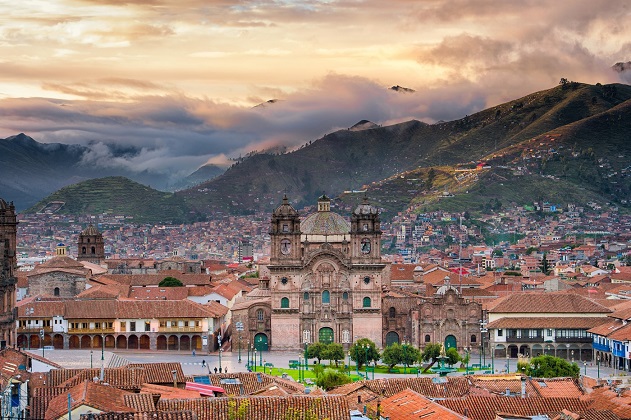
After lunch, we explore the historic centre of Cusco, including the artistic San Blas neighbourhood,
the mysterious Twelve-Angle Stone and the perfectly fitted stonework of the Coricancha, the former Inca Temple of the Sun.
In the evening, we visit the Museo del Pisco, where we learn more about Peru’s famous national spirit
before mixing our very own Pisco Sour. Of course, we finish the experience by tasting our creations!
Early in the morning, we visit the lively and colourful San Pedro Market, where an extraordinary
mix of colours, aromas and flavours awaits us. From tropical fruits brought in from the vast
Amazon region to dozens of varieties of corn and potatoes, as well as quinoa and coca leaves,
the market offers a fascinating insight into the incredible culinary diversity of Peru.
Our exploration of the ancient Inca world continues in spectacular fashion at Sacsayhuamán.
This impressive Inca fortress is famous for its enormous stone blocks, precisely cut and fitted
together without mortar. How the Incas transported and positioned these tons-heavy stones remains
one of the great mysteries of their engineering.
After an extensive visit, we walk back to Cusco (approx. 2 hours), enjoying magnificent
views over the surrounding Andean mountains along the way.
After lunch, we explore the historic centre of Cusco, including the artistic San Blas neighbourhood,
the mysterious Twelve-Angle Stone and the perfectly fitted stonework of the Coricancha, the former Inca Temple of the Sun.
In the evening, we visit the Museo del Pisco, where we learn more about Peru’s famous national spirit
before mixing our very own Pisco Sour. Of course, we finish the experience by tasting our creations!
Our overnight stay will be at the ***Hotel Casa Andina Standard San Blas or equivalent in Cuzco (Breakfast included)
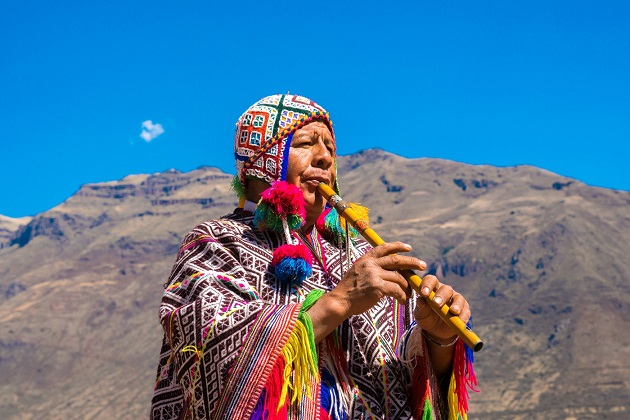 Today we continue across the Altiplano, the vast high plateau of the Andes, towards Puno and Lake Titicaca.
The journey takes us through an authentic and spectacular landscape of rugged mountain ranges, wide-open
plains and grazing herds of alpacas.
Along the way, we visit the archaeological site of Pukara, an important pre-Inca centre known for
its distinctive stone sculptures and pottery.
We continue to Andahuaylillas, where we visit the remarkable colonial church known as the “Sistine Chapel of the Andes.”
Its richly decorated interior combines European religious art with indigenous influences and offers a fascinating glimpse into Peru’s colonial past.
Our final stop is the archaeological complex of Raqchi, an important Inca ceremonial centre dedicated to Wiracocha,
the Inca creator god. The enormous remains of the temple and its distinctive architecture provide a striking
impression of the scale and sophistication of Inca construction.
Today we continue across the Altiplano, the vast high plateau of the Andes, towards Puno and Lake Titicaca.
The journey takes us through an authentic and spectacular landscape of rugged mountain ranges, wide-open
plains and grazing herds of alpacas.
Along the way, we visit the archaeological site of Pukara, an important pre-Inca centre known for
its distinctive stone sculptures and pottery.
We continue to Andahuaylillas, where we visit the remarkable colonial church known as the “Sistine Chapel of the Andes.”
Its richly decorated interior combines European religious art with indigenous influences and offers a fascinating glimpse into Peru’s colonial past.
Our final stop is the archaeological complex of Raqchi, an important Inca ceremonial centre dedicated to Wiracocha,
the Inca creator god. The enormous remains of the temple and its distinctive architecture provide a striking
impression of the scale and sophistication of Inca construction.
Our overnight stay will be at the ***Hotel Casa Andina Standard Puno or equivalent in Puno (Breakfast and lunch included)
 We set off early for the COOPAIN Cabana Agro-Industrial Cooperative, north of Puno. Since 2012, the
cooperative has been directly exporting organic quinoa to international markets, particularly to the United States,
Germany, France and the Netherlands. During our visit, we explore the quinoa fields and processing facility and
learn how the crop is cultivated—from sowing and growing through to harvesting and processing.
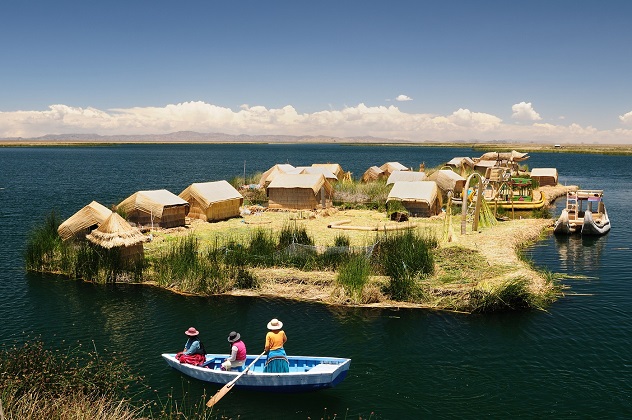
At 3,800 metres above sea level, Lake Titicaca is one of the highest navigable lakes in the world.
Everything from small fishing boats and traditional reed boats to yachts and passenger vessels can be seen
crossing its waters. The lake is around 15.5 times the size of Lake Constance and lies between Peru and Bolivia.
Its enormous scale is impressive, but so are its shimmering shades of deep blue and turquoise, framed by the surrounding mountains.
Despite the cold water, Lake Titicaca acts as a natural heat reservoir, creating a unique microclimate that
allows crops such as potatoes, corn, barley and quinoa to thrive along its shores.
The famous Uros people of the Lake Titicaca region traditionally live on floating islands made entirely
from totora reeds. Their homes and boats are constructed from the same material and require regular maintenance and renewal.
In the afternoon, we reach the idyllic Isla Amantani, where we are welcomed by local indigenous families and
divided among their homes. Communication is often a mixture of gestures, Spanish and Quechua, as some families speak little or no English.
Before dinner, we hike up one of the island’s two sacred mountains, Pachamama or Pachatata. From the temple
at the summit, we enjoy a spectacular sunset over Lake Titicaca, with the vast blue waters stretching towards the distant mountains.
Back with our host families, we share a traditional dinner and spend the evening listening to local
music and experiencing everyday island life—a warm and authentic cultural encounter.
We set off early for the COOPAIN Cabana Agro-Industrial Cooperative, north of Puno. Since 2012, the
cooperative has been directly exporting organic quinoa to international markets, particularly to the United States,
Germany, France and the Netherlands. During our visit, we explore the quinoa fields and processing facility and
learn how the crop is cultivated—from sowing and growing through to harvesting and processing.
At 3,800 metres above sea level, Lake Titicaca is one of the highest navigable lakes in the world.
Everything from small fishing boats and traditional reed boats to yachts and passenger vessels can be seen
crossing its waters. The lake is around 15.5 times the size of Lake Constance and lies between Peru and Bolivia.
Its enormous scale is impressive, but so are its shimmering shades of deep blue and turquoise, framed by the surrounding mountains.
Despite the cold water, Lake Titicaca acts as a natural heat reservoir, creating a unique microclimate that
allows crops such as potatoes, corn, barley and quinoa to thrive along its shores.
The famous Uros people of the Lake Titicaca region traditionally live on floating islands made entirely
from totora reeds. Their homes and boats are constructed from the same material and require regular maintenance and renewal.
In the afternoon, we reach the idyllic Isla Amantani, where we are welcomed by local indigenous families and
divided among their homes. Communication is often a mixture of gestures, Spanish and Quechua, as some families speak little or no English.
Before dinner, we hike up one of the island’s two sacred mountains, Pachamama or Pachatata. From the temple
at the summit, we enjoy a spectacular sunset over Lake Titicaca, with the vast blue waters stretching towards the distant mountains.
Back with our host families, we share a traditional dinner and spend the evening listening to local
music and experiencing everyday island life—a warm and authentic cultural encounter.
Overnight in a simple homestay with an indigenous family on Isla Amantani (private bathroom with toilet) (Breakfast and dinner included)
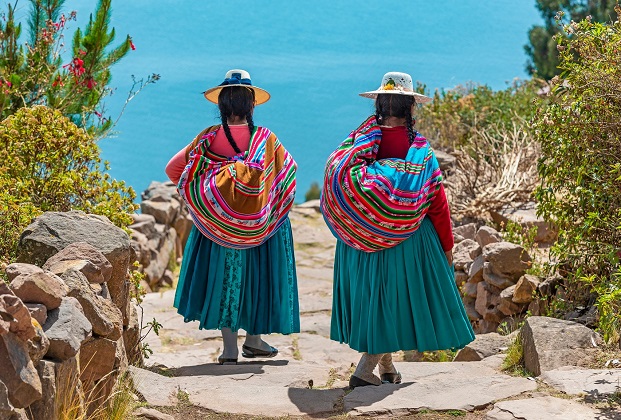 In the morning, we say goodbye to our indigenous hosts and take a boat to Taquile Island,
famous for its extraordinary textile traditions—and particularly for its knitting men.
The men of Taquile create distinctive knitted caps whose colours and patterns reveal
the wearer’s relationship status at a glance: whether he is single, looking for a partner
or already married. This remarkable tradition is an integral part of the island’s cultural
identity and has been recognised by UNESCO as an example of intangible cultural heritage.
The Taquileños are organised in a community-based cooperative and consciously follow three
principles rooted in Inca tradition: “Ama suwa, ama llulla, ama qilla”—do not steal, do not lie,
do not be lazy. These principles continue to shape community life today, so much so that the
island traditionally has no permanent police presence.
After exploring the island and its unique cultural traditions, we continue our journey back towards the mainland.
In the morning, we say goodbye to our indigenous hosts and take a boat to Taquile Island,
famous for its extraordinary textile traditions—and particularly for its knitting men.
The men of Taquile create distinctive knitted caps whose colours and patterns reveal
the wearer’s relationship status at a glance: whether he is single, looking for a partner
or already married. This remarkable tradition is an integral part of the island’s cultural
identity and has been recognised by UNESCO as an example of intangible cultural heritage.
The Taquileños are organised in a community-based cooperative and consciously follow three
principles rooted in Inca tradition: “Ama suwa, ama llulla, ama qilla”—do not steal, do not lie,
do not be lazy. These principles continue to shape community life today, so much so that the
island traditionally has no permanent police presence.
After exploring the island and its unique cultural traditions, we continue our journey back towards the mainland.
Our overnight stay will be at the ***Hotel Casa Andina Standard Puno or equivalent in Puno (Breakfast and lunch included)
Today we enjoy one final delicious breakfast at our hotel in Puno. The morning is free for some last-minute shopping,
a relaxed stroll through town or any final explorations before we bid farewell to Peru.
With wonderful memories of the country’s diverse landscapes, fascinating agricultural traditions,
ancient cultures and warm encounters, our journey slowly comes to an end.
(Breakfast included)