
Welcome to the agent-area of . Please select your name from the list below and you can access your personal information immediately!
Welcome to the agent-area.
Do you want to ...
Hello! You can create your own login below.
You successfully logged out. If you need access to the protected area again, you can login again at any time.
Greetings from Cuzco,
The Otto's Tours Team
Agricultural Discovery Tour
Potatoes, Coffee, Maca, Quinoa, Coca, Alpaca & Fish Processing
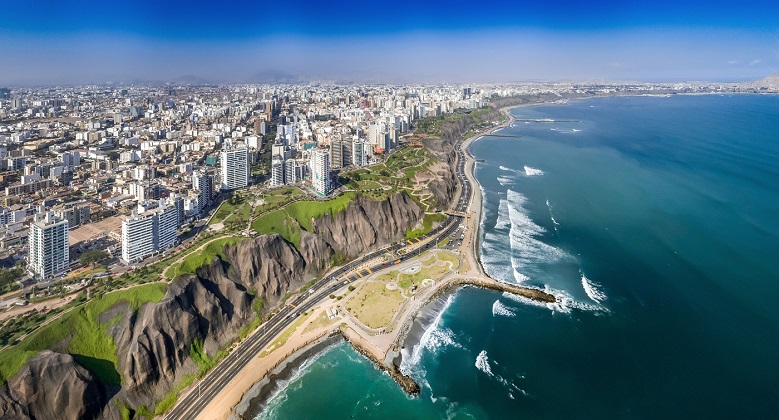 Welcome to Peru! Lima, the country’s capital, is home to more than 8 million people and by far
the largest city in Peru. Each of its districts has its own character, stories and attractions.
Just a few years after its foundation, Lima became—alongside Mexico City—one of the most
important cities of the Spanish colonies in the Americas. Its many colonial treasures,
from grand city palaces and Renaissance and Baroque churches to historic universities and
elegant mansions, still bear witness to the enormous wealth and importance the city once enjoyed.
A fascinating introduction to Peru and the starting point of our journey into the country’s agricultural heartland.
Welcome to Peru! Lima, the country’s capital, is home to more than 8 million people and by far
the largest city in Peru. Each of its districts has its own character, stories and attractions.
Just a few years after its foundation, Lima became—alongside Mexico City—one of the most
important cities of the Spanish colonies in the Americas. Its many colonial treasures,
from grand city palaces and Renaissance and Baroque churches to historic universities and
elegant mansions, still bear witness to the enormous wealth and importance the city once enjoyed.
A fascinating introduction to Peru and the starting point of our journey into the country’s agricultural heartland.
Our overnight stay will be at the ***Hotel Centro by Casa Andina Standard Benavides or equivalent in Lima (No meals included)
Today we explore Lima’s pre-Hispanic, colonial and modern heritage on a city tour through
its historic and contemporary districts. We begin in the heart of the city at Plaza Mayor,
surrounded by the imposing Cathedral, the Archbishop’s Palace and the Government Palace.
Inside the cathedral lies the tomb of Francisco Pizarro, the Spanish conquistador who founded Lima.
We continue to the famous San Francisco Monastery, renowned for its historic library and atmospheric underground catacombs.
In the afternoon, we turn our attention to one of Peru’s most important agricultural treasures:
the International Potato Center (CIP). Its gene bank houses the world’s largest collection of
potato varieties, with more than 4,500 different varieties preserved in specially cooled storage facilities.
A member of the research team takes us behind the scenes, introducing us to the center’s work and
its projects dedicated to preserving and developing this vital crop.
Our overnight stay will be at the ***Hotel Centro by Casa Andina Benavides or equivalent in Lima (breakfast included)
Today we travel by modern coach towards the northeast, heading into the Chanchamayo
Province and onward to the Andean highlands. Our route takes us through the fertile
Mantaro Valley, an important agricultural region supplying the capital with a remarkable
variety of produce, including beans, peas, corn, oca, olluco, potatoes, wheat, cassava,
onions and a wide range of dairy products.
Along the way, we make plenty of photo stops, taking in the changing landscapes and
allowing ourselves time to gradually acclimatize to the increasing altitude.
As the scenery shifts from fertile valleys to rugged Andean mountains, we get our
first real taste of Peru’s agricultural diversity.
Our overnight stay will be at the San José Parque Ecológico & Lodge Hotel Asociado Casa Andina or equivalent in La Merced (breakfast included)
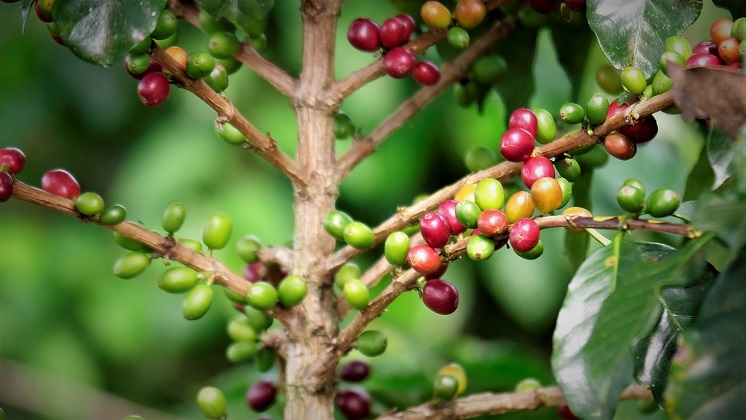 After breakfast, we travel along the eastern slopes of the Cordillera Yanachaga to Villa Rica,
a region with ideal conditions for growing high-quality coffee. Here, the Andes protect the area
from cold maritime influences, while the transition between the highlands and the eastern rainforest
creates an extraordinary diversity of flora and fauna. Dense jungle covers much of the region,
making some communities difficult to reach by road.
Small-scale coffee farmers have joined forces in a cooperative, with each grower cultivating an
average of just two hectares with great care and a strong commitment to social and environmental
responsibility. Individually, these small farms would produce too little for direct export, but
together they harvest around 280 sacks of Arabica coffee per year, each weighing 69 kg. The
cooperative gives otherwise isolated communities access to international markets and a reliable
source of income. Organic fertilization and avoiding pesticides are also important elements in protecting the region’s biodiversity.
We take a close look at the coffee laboratory, where quality is carefully assessed, as
well as the processing facility, where the golden green coffee beans are selected and prepared
for export. We also visit Moali Laboratorio de Café, where the raw coffee is subjected to further quality controls.
In the afternoon, one of the local coffee farms welcomes us for an insight into the entire
journey of coffee—from the plant to the finished bean, known locally as the “green gold of Villa Rica.”
After the tour, the coffee grower and his family invite us to a tasting, giving us the perfect
opportunity to discover the aromas and character of locally grown Arabica.
After breakfast, we travel along the eastern slopes of the Cordillera Yanachaga to Villa Rica,
a region with ideal conditions for growing high-quality coffee. Here, the Andes protect the area
from cold maritime influences, while the transition between the highlands and the eastern rainforest
creates an extraordinary diversity of flora and fauna. Dense jungle covers much of the region,
making some communities difficult to reach by road.
Small-scale coffee farmers have joined forces in a cooperative, with each grower cultivating an
average of just two hectares with great care and a strong commitment to social and environmental
responsibility. Individually, these small farms would produce too little for direct export, but
together they harvest around 280 sacks of Arabica coffee per year, each weighing 69 kg. The
cooperative gives otherwise isolated communities access to international markets and a reliable
source of income. Organic fertilization and avoiding pesticides are also important elements in protecting the region’s biodiversity.
We take a close look at the coffee laboratory, where quality is carefully assessed, as
well as the processing facility, where the golden green coffee beans are selected and prepared
for export. We also visit Moali Laboratorio de Café, where the raw coffee is subjected to further quality controls.
In the afternoon, one of the local coffee farms welcomes us for an insight into the entire
journey of coffee—from the plant to the finished bean, known locally as the “green gold of Villa Rica.”
After the tour, the coffee grower and his family invite us to a tasting, giving us the perfect
opportunity to discover the aromas and character of locally grown Arabica.
Our overnight stay will be at the San José Parque Ecológico & Lodge Hotel Asociado Casa Andina or equivalent in La Merced (breakfast included)
This morning we travel to Huasahuasi (2,750 m), a highland region renowned for its potato production.
The area’s rich, humid soils provide ideal conditions for growing tubers, making the local potato farmers some of the most productive in Peru.
We visit a local small-scale potato farm, where a campesino introduces us to everyday life in the
community and explains the challenges faced by local farmers. We then walk through the surrounding
fields, where potatoes and vegetables—including beans, olluco and onions—are cultivated and harvested.
Naturally, we have the opportunity to taste some of the locally grown potatoes and cheese.
We also visit nearby farms raising cattle, sheep, goats and horses, providing plenty of
opportunities to meet local farmers and learn more about traditional Andean agriculture.
After lunch, we head to the regional market together with a Peruvian cook. Here, colourful
stalls display dozens of different potato varieties. We select some of them before heading
into the kitchen ourselves to prepare a selection of traditional Peruvian potato dishes for dinner,
including Papa Rellena, Papa a la Huancaína and Causa Rellena.
A day that brings Peru’s most iconic crop from field to market to plate.
Our overnight stay will be at the Hacienda Santa Maria or equivalent in Tarma (breakfast and dinner included)
This morning we travel to the community of San Pedro de Cajas, where agriculture and livestock
farming shape everyday life. Local families cultivate potatoes and raise sheep and alpacas,
while wild vicuña herds roam the surrounding highlands. Women in the community also preserve
traditional weaving skills, creating carpets, blankets, jackets and scarves from alpaca, sheep and vicuña wool.
We visit a traditional handicraft and textile workshop, where some of the finest artisans in
the Junín region demonstrate their skills and explain the techniques and materials behind their work.
In the afternoon, we continue to the Bonbon Plateau, rising to more than 4,000 metres above sea level.
Here, we discover the fields of maca, the famous Andean root often referred to as the “food of the Incas.”
The region is considered one of the historic centres of maca cultivation and is home to an ancient variety
known locally as “maca shihua.” We visit a small-scale farmer who has joined forces with other campesinos
in a cooperative, learning more about cultivation, traditional knowledge and the challenges of farming at such extreme altitude.
On our way towards Caral, we stop in Áspero, a small fishing village on the Peruvian coast and
one of the settlements associated with the ancient Caral civilization. The site made international
headlines in 2016 following the discovery of a 4,500-year-old mummy buried with intricately
carved wooden figures depicting monkeys and birds.
Tonight we stay at a former hacienda, Empedrada Ranch & Lodge, surrounded by extensive avocado and mandarin orchards. (breakfast included)
Just a short distance from our hotel lies Caral, the oldest known urban settlement in the Americas.
Together with a local guide, we explore its impressive stepped pyramids and monumental structures.
Rediscovered in 1994 on a desert plateau in the Supe River Valley, Caral was built around 2600 BC—making
it roughly as old as the pyramids of ancient Egypt. Since 2009, the archaeological site has been a UNESCO World Heritage Site.
One of Caral’s greatest achievements was its sophisticated irrigation system, which made
agriculture and permanent settlement possible in an otherwise harsh landscape of rock and desert.
The system later influenced agricultural practices developed by the Incas.
Another remarkable feature is the series of granite monoliths, some around four metres high,
that flank the Great Temple. How these enormous stones were transported to Caral remains a mystery.
Archaeologists continue to uncover new pyramids, residential areas and other structures, revealing more about this fascinating early civilization.
After our visit, we continue towards Huaraz in the Andean highlands. During the approximately
five-hour journey, the landscape changes dramatically—from the barren coastal desert through
increasingly rugged valleys and finally into the spectacular Andes.
Our overnight stay will be at the Hotel El Patio de Monterrey in Huaraz (breakfast included)
 After breakfast, we return to the mountain valley of the Callejón de Huaylas and visit the
small town of Yungay. Its name roughly translates as “warm valley”, but the town is remembered
for one of the most devastating natural disasters in Peru’s recent history. On 31 May 1970,
a massive landslide of mud, rock and ice swept through Yungay, destroying the entire town.
Only the cemetery on a hill and a large statue of Christ survived. Of the town’s approximately
19,000 inhabitants, only a handful of children and teenagers survived, having been attending a
religious event in a neighbouring village at the time. Many victims were never recovered.
Today, gravestones still stand where houses once stood—a deeply moving reminder of the tragedy.
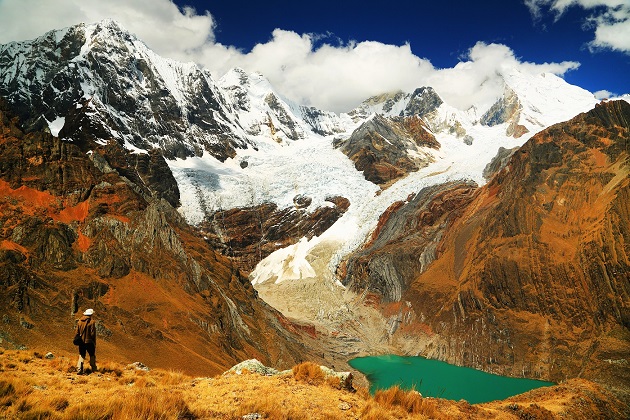
We continue into Huascarán National Park, home to 41 rivers, 663 glaciers, 269 lakes and
27 snow-covered peaks, including Huascarán (6,678 m), Peru’s highest mountain.
Our route follows the Callejón de Huaylas along the spectacular Cordillera Blanca,
climbing through dramatic mountain scenery to the Llanganuco Lakes at 3,860 m.
Thanks to their high mineral content, the lakes shimmer in an extraordinary turquoise blue.
A roughly one-hour hike takes us past remnants of ancient high-altitude forests to Laguna Orconcocha,
where mountain orchids and bromeliads grow. Along the way, we keep our eyes open for Andean wildlife
such as spectacled bears, white-tailed and South Andean deer, vicuñas, Andean condors and giant
hummingbirds. Pumas and jaguars are also found in the wider region, although sightings are rare.
We then follow a steep series of switchbacks up to Portachuelo Pass at 4,767 m, where the
Mirador Portachuelo offers a breathtaking panorama of the turquoise lakes framed by Huandoy,
Huascarán and the surrounding ice-clad peaks of the Cordillera Blanca.
All that fresh mountain air works up an appetite! In Humacchuco, a local farming family is waiting
for us with a traditional Pachamanca, Peru’s famous earth-oven feast. Seasonal ingredients are
cooked underground in a heated pit known as a huatia, traditionally blessed before the meal.
Together with our hosts, we enjoy this wonderfully authentic taste of Andean culture before returning to our accommodation.
After breakfast, we return to the mountain valley of the Callejón de Huaylas and visit the
small town of Yungay. Its name roughly translates as “warm valley”, but the town is remembered
for one of the most devastating natural disasters in Peru’s recent history. On 31 May 1970,
a massive landslide of mud, rock and ice swept through Yungay, destroying the entire town.
Only the cemetery on a hill and a large statue of Christ survived. Of the town’s approximately
19,000 inhabitants, only a handful of children and teenagers survived, having been attending a
religious event in a neighbouring village at the time. Many victims were never recovered.
Today, gravestones still stand where houses once stood—a deeply moving reminder of the tragedy.
We continue into Huascarán National Park, home to 41 rivers, 663 glaciers, 269 lakes and
27 snow-covered peaks, including Huascarán (6,678 m), Peru’s highest mountain.
Our route follows the Callejón de Huaylas along the spectacular Cordillera Blanca,
climbing through dramatic mountain scenery to the Llanganuco Lakes at 3,860 m.
Thanks to their high mineral content, the lakes shimmer in an extraordinary turquoise blue.
A roughly one-hour hike takes us past remnants of ancient high-altitude forests to Laguna Orconcocha,
where mountain orchids and bromeliads grow. Along the way, we keep our eyes open for Andean wildlife
such as spectacled bears, white-tailed and South Andean deer, vicuñas, Andean condors and giant
hummingbirds. Pumas and jaguars are also found in the wider region, although sightings are rare.
We then follow a steep series of switchbacks up to Portachuelo Pass at 4,767 m, where the
Mirador Portachuelo offers a breathtaking panorama of the turquoise lakes framed by Huandoy,
Huascarán and the surrounding ice-clad peaks of the Cordillera Blanca.
All that fresh mountain air works up an appetite! In Humacchuco, a local farming family is waiting
for us with a traditional Pachamanca, Peru’s famous earth-oven feast. Seasonal ingredients are
cooked underground in a heated pit known as a huatia, traditionally blessed before the meal.
Together with our hosts, we enjoy this wonderfully authentic taste of Andean culture before returning to our accommodation.
Our overnight stay will be at the Hotel El Patio de Monterrey in Huaraz (breakfast included)
 We continue to Caraz, at the end of the fertile Santa River Valley. Surrounded by snow-capped peaks,
this peaceful Andean town is known for its delicious Manjar Blanco—a sweet cream made from milk,
sugar and vanilla—as well as local honey and high-quality woollen blankets and ponchos, traditionally handmade by local women.
We then enjoy the changing scenery on our approximately three-hour journey through the Casma Valley,
a natural corridor between the mountains and the desert. Gradually, the spectacular peaks of the Andes
give way to the arid landscapes of northern Peru, where the fascinating secrets of ancient pre-Inca civilizations await us.
Northern Peru is often referred to as the “Egypt of South America” because of its extraordinary wealth
of ancient archaeological sites. One of the most remarkable is the Sechin Complex, located just 15 km
from the Pacific coast and dating back to around 3,200–3,400 BC.
The main sites—including Cerro Sechin, Sechin Bajo, Taukachi-Konkan and Sechin Alto—bear witness to a
civilization that achieved remarkable things thousands of years ago. At Cerro Sechin, enormous stone
slabs are covered with striking carved figures depicting warriors, victims and ritual scenes.
The imagery offers a fascinating, but sometimes unsettling, glimpse into the beliefs and rituals of this ancient society.
With these extraordinary impressions, we continue to Trujillo, arriving in the late afternoon.
Peru’s northern coastal capital combines ancient civilizations, impressive archaeological
treasures and a vibrant contemporary cultural scene.
We continue to Caraz, at the end of the fertile Santa River Valley. Surrounded by snow-capped peaks,
this peaceful Andean town is known for its delicious Manjar Blanco—a sweet cream made from milk,
sugar and vanilla—as well as local honey and high-quality woollen blankets and ponchos, traditionally handmade by local women.
We then enjoy the changing scenery on our approximately three-hour journey through the Casma Valley,
a natural corridor between the mountains and the desert. Gradually, the spectacular peaks of the Andes
give way to the arid landscapes of northern Peru, where the fascinating secrets of ancient pre-Inca civilizations await us.
Northern Peru is often referred to as the “Egypt of South America” because of its extraordinary wealth
of ancient archaeological sites. One of the most remarkable is the Sechin Complex, located just 15 km
from the Pacific coast and dating back to around 3,200–3,400 BC.
The main sites—including Cerro Sechin, Sechin Bajo, Taukachi-Konkan and Sechin Alto—bear witness to a
civilization that achieved remarkable things thousands of years ago. At Cerro Sechin, enormous stone
slabs are covered with striking carved figures depicting warriors, victims and ritual scenes.
The imagery offers a fascinating, but sometimes unsettling, glimpse into the beliefs and rituals of this ancient society.
With these extraordinary impressions, we continue to Trujillo, arriving in the late afternoon.
Peru’s northern coastal capital combines ancient civilizations, impressive archaeological
treasures and a vibrant contemporary cultural scene.
Our overnight stay will be at the ***Hotel Casa Andina Standard in Trujillo (breakfast included)
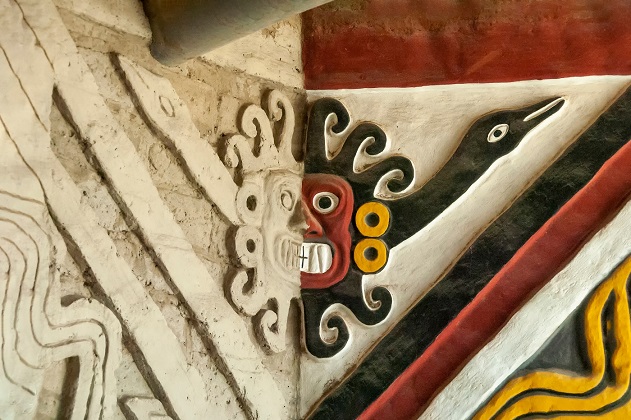
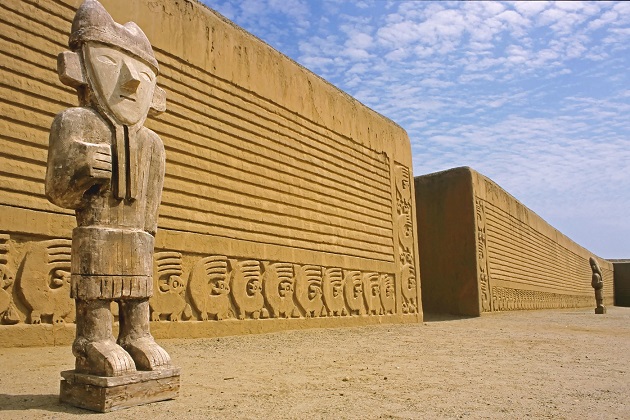 Today we delve deeper into the fascinating legacy of Peru’s pre-Inca civilizations, including the Moche and Chimú.
Our first stop is the Temple of the Dragon, a religious complex associated with the ancient Moche civilization.
Archaeologists have uncovered remarkable murals and friezes here, offering insights into the beliefs,
rituals and artistic traditions of this sophisticated culture.
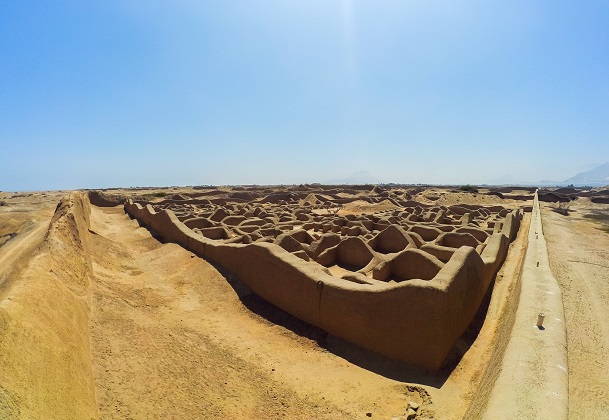
We then continue to Chan Chan, the former capital of the mighty Chimú Kingdom and the largest
adobe city in the world. Built entirely from mud bricks, this extraordinary urban complex
is unique in its scale and design. (Closed on Mondays.)
Chan Chan once featured an elaborate irrigation system, parts of which are still used today.
Archaeologists have also discovered richly furnished tombs containing jewellery, ceramics and the
remains of young women, providing evidence of elaborate funerary and ritual practices associated with
the rulers of Chimor. Yet many secrets of this vast ancient city remain waiting to be uncovered.
At lunchtime, we head to the seaside promenade of Huanchaco, where we enjoy the
“catch of the day” with a view of the Pacific Ocean.
Today we delve deeper into the fascinating legacy of Peru’s pre-Inca civilizations, including the Moche and Chimú.
Our first stop is the Temple of the Dragon, a religious complex associated with the ancient Moche civilization.
Archaeologists have uncovered remarkable murals and friezes here, offering insights into the beliefs,
rituals and artistic traditions of this sophisticated culture.
We then continue to Chan Chan, the former capital of the mighty Chimú Kingdom and the largest
adobe city in the world. Built entirely from mud bricks, this extraordinary urban complex
is unique in its scale and design. (Closed on Mondays.)
Chan Chan once featured an elaborate irrigation system, parts of which are still used today.
Archaeologists have also discovered richly furnished tombs containing jewellery, ceramics and the
remains of young women, providing evidence of elaborate funerary and ritual practices associated with
the rulers of Chimor. Yet many secrets of this vast ancient city remain waiting to be uncovered.
At lunchtime, we head to the seaside promenade of Huanchaco, where we enjoy the
“catch of the day” with a view of the Pacific Ocean.
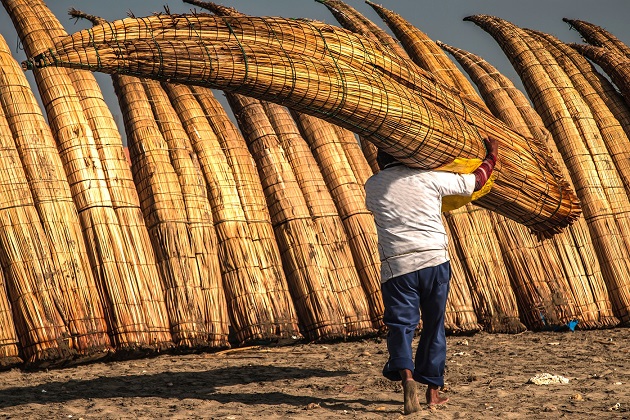 Afterwards, we stroll along the beach to the historic pier, which stretches for more than
100 metres and is over a century old. Here we encounter one of the most iconic symbols of
Peru’s northern coast: the Caballitos de Totora—small reed boats traditionally used by local fishermen.
The Moche were already using similar vessels along this coastline some 2,000 years ago.
We return to Trujillo to round off the day with a stroll along the Paseo de Aguas boulevard, including its famous Tunnel of Wishes.
Afterwards, we stroll along the beach to the historic pier, which stretches for more than
100 metres and is over a century old. Here we encounter one of the most iconic symbols of
Peru’s northern coast: the Caballitos de Totora—small reed boats traditionally used by local fishermen.
The Moche were already using similar vessels along this coastline some 2,000 years ago.
We return to Trujillo to round off the day with a stroll along the Paseo de Aguas boulevard, including its famous Tunnel of Wishes.
Our overnight stay will be at the ***Hotel Casa Andina Standard in Trujillo (breakfast included)
 Trujillo is often considered Peru’s unofficial cultural capital, with its elegant colonial
architecture, pleasant climate, festivals, music and lively cultural scene. Founded in
1534 on the orders of Spanish conquistador Francisco Pizarro, it is today Peru’s third-largest city.
After breakfast, we explore the historic centre, beginning at the Plaza de Armas. Grand
colonial buildings with ornate wrought-iron window grilles, colourful façades and picturesque
balconies reveal the city’s former wealth and elegance. A glimpse inside some of these
historic mansions reveals beautifully preserved interiors that are every bit as impressive as their façades.
We then head to the fascinating archaeological complex of El Brujo. At first glance, the site
may appear rather unassuming, but it conceals remarkable treasures. Among the pyramids of El Brujo
lies the famous mummy of Señora de Cao, an exceptionally powerful female figure from the Moche
period whose discovery challenged long-held assumptions about gender and political power in ancient Peru.
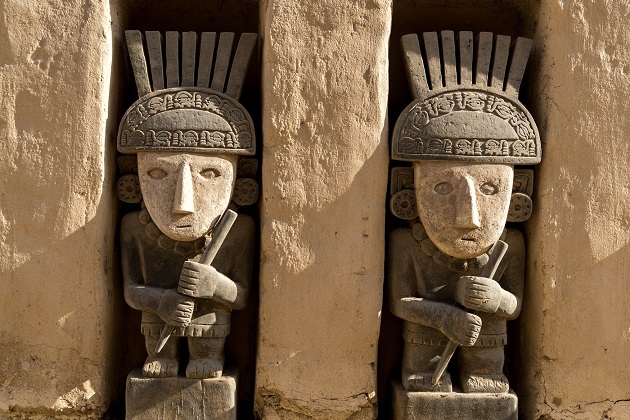
At Cao Viejo, the temple walls rise above the central ceremonial plaza and are richly d
ecorated with colourful murals and reliefs depicting warriors, prisoners and ritual scenes.
The imagery provides a vivid, sometimes unsettling glimpse into the ceremonial world of the Moche.
In the afternoon, we continue to Chiclayo, known as the “Pearl of the North” and one of the
most important centres of Moche heritage. Located close to the Pacific coast, the city is
also renowned for its distinctive cuisine—including ceviche de conchas negras, ceviche prepared with dark-hued black clams.
Trujillo is often considered Peru’s unofficial cultural capital, with its elegant colonial
architecture, pleasant climate, festivals, music and lively cultural scene. Founded in
1534 on the orders of Spanish conquistador Francisco Pizarro, it is today Peru’s third-largest city.
After breakfast, we explore the historic centre, beginning at the Plaza de Armas. Grand
colonial buildings with ornate wrought-iron window grilles, colourful façades and picturesque
balconies reveal the city’s former wealth and elegance. A glimpse inside some of these
historic mansions reveals beautifully preserved interiors that are every bit as impressive as their façades.
We then head to the fascinating archaeological complex of El Brujo. At first glance, the site
may appear rather unassuming, but it conceals remarkable treasures. Among the pyramids of El Brujo
lies the famous mummy of Señora de Cao, an exceptionally powerful female figure from the Moche
period whose discovery challenged long-held assumptions about gender and political power in ancient Peru.
At Cao Viejo, the temple walls rise above the central ceremonial plaza and are richly d
ecorated with colourful murals and reliefs depicting warriors, prisoners and ritual scenes.
The imagery provides a vivid, sometimes unsettling glimpse into the ceremonial world of the Moche.
In the afternoon, we continue to Chiclayo, known as the “Pearl of the North” and one of the
most important centres of Moche heritage. Located close to the Pacific coast, the city is
also renowned for its distinctive cuisine—including ceviche de conchas negras, ceviche prepared with dark-hued black clams.
Our overnight stay will be at the ***Hotel Casa Andina Select or equivalent in Chiclayo (Breakfast included)
 We begin the day with a stroll through Chiclayo’s famous Witches’ Market, a fascinating
place where traditional healing and Andean beliefs come together. Between herbal remedies,
mysterious potions, protective amulets, talismans, powders and ointments, we discover a
world of ancient traditions and local spirituality.
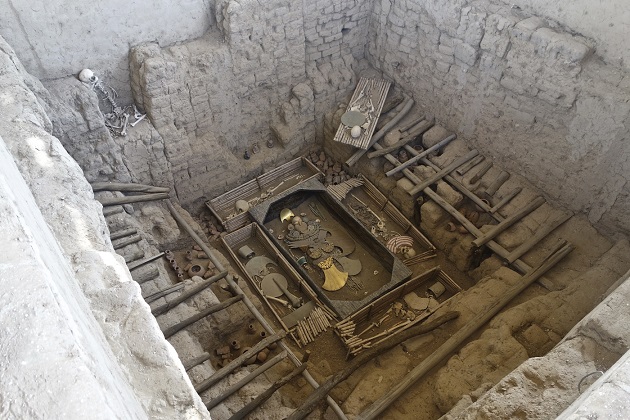
We then continue to the spectacular Moche archaeological site of Huaca Rajada,
where the royal tombs of the legendary Señor de Sipán were discovered in 1987.
His richly decorated burial garments were adorned with gold, silver and precious stones,
while the tomb itself contained an extraordinary collection of treasures. The discovery is
considered one of the most important archaeological finds in the Americas. (Closed on Mondays.)
We begin the day with a stroll through Chiclayo’s famous Witches’ Market, a fascinating
place where traditional healing and Andean beliefs come together. Between herbal remedies,
mysterious potions, protective amulets, talismans, powders and ointments, we discover a
world of ancient traditions and local spirituality.
We then continue to the spectacular Moche archaeological site of Huaca Rajada,
where the royal tombs of the legendary Señor de Sipán were discovered in 1987.
His richly decorated burial garments were adorned with gold, silver and precious stones,
while the tomb itself contained an extraordinary collection of treasures. The discovery is
considered one of the most important archaeological finds in the Americas. (Closed on Mondays.)
 In the afternoon, with the best light for photography, we head to the Valley of the Pyramids at
Túcume. Twenty-six monumental adobe pyramids rise from a vast landscape dotted with algarrobo
trees, forming one of the most impressive archaeological complexes of northern Peru.
To escape the dust and heat, we end the day at Pimentel Beach. With a cocktail in hand,
we watch the waves shimmer in the evening light and enjoy the view of the historic pier—a
relaxed finale to a day filled with history, mystery and discovery.
In the afternoon, with the best light for photography, we head to the Valley of the Pyramids at
Túcume. Twenty-six monumental adobe pyramids rise from a vast landscape dotted with algarrobo
trees, forming one of the most impressive archaeological complexes of northern Peru.
To escape the dust and heat, we end the day at Pimentel Beach. With a cocktail in hand,
we watch the waves shimmer in the evening light and enjoy the view of the historic pier—a
relaxed finale to a day filled with history, mystery and discovery.
Our overnight stay will be at the ***Hotel Casa Andina Select or equivalent in Chiclayo (Breakfast included)
After a final breakfast in Chiclayo, it is time to say goodbye to our guide and bring our
journey through northern Peru to an end. With unforgettable encounters, fascinating insights into
Peru’s agricultural traditions and the ancient civilizations of the north, we head to the airport for our flight via Lima back to Europe.
(Breakfast included)